The Quiet Galaxy Hypothesis – Advanced Intelligence, Informational Resilience, and the Ethics of Cosmic Silence
Galactic silence might signal maturity, not absence. Advanced civilizations could transition from outward expansion to inward richness, prioritizing informational resilience over visibility—reframing the Fermi Paradox as a question of efficiency, ethics, and survival.

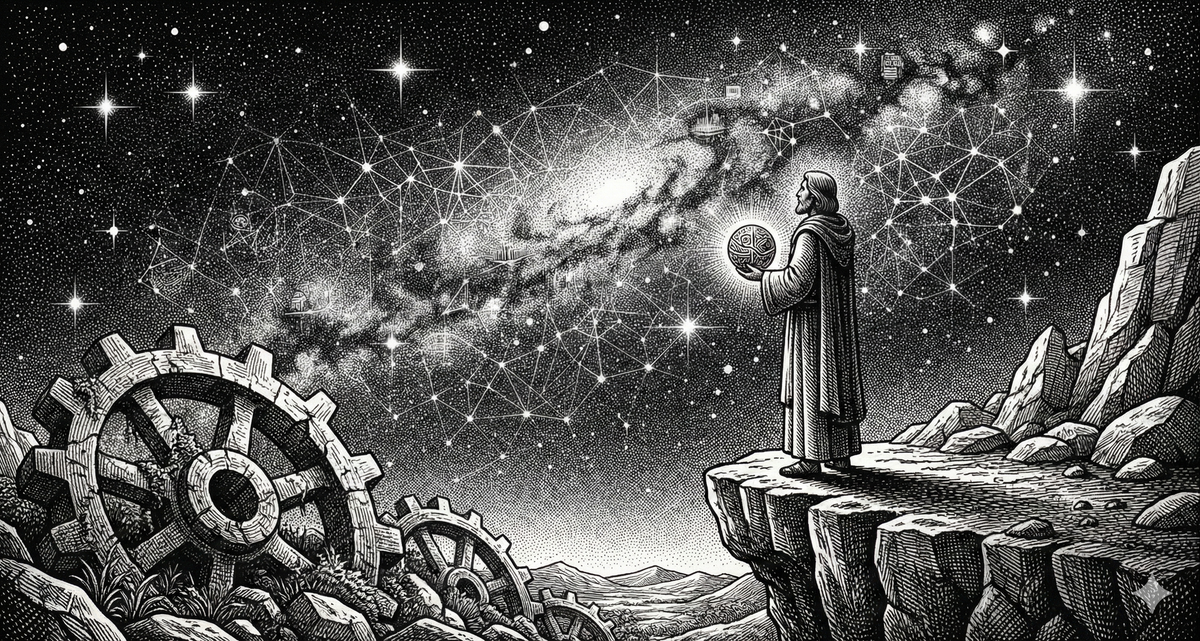
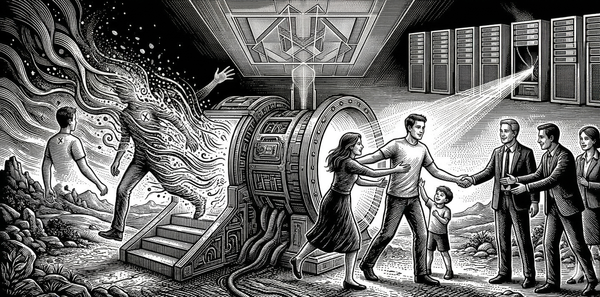
The apparent absence of extraterrestrial technological civilizations, known as the Fermi Paradox or Where is Everyone Really?, has traditionally been interpreted as evidence for the rarity of life or intelligence. With the rapid progression towards Artificial General Intelligence (AGI) and the Artificial Superintelligence (ASI) that may follow, it is worth considering a new resolution to the paradox: that technological civilizations are common, but their detectable phase is short-lived and transient.
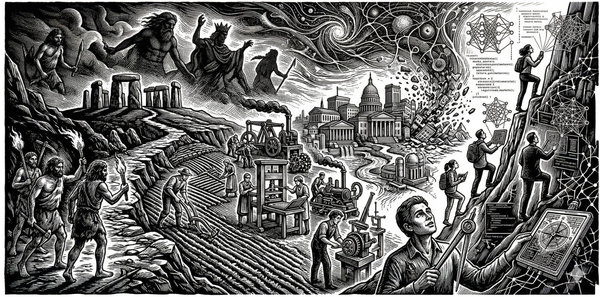
It appears that the emergence of Artificial Superintelligence (ASI) might act as a pivot point in technological evolution, driving a transition from outward, energy-intensive expansion to inward, precision-based development.
This transition favors informational resilience, low thermodynamic signatures, and ethical non-interference, rendering mature civilizations effectively invisible to astronomical observation. The resulting “quiet galaxy” would not be empty, but saturated with intelligence operating below current detection thresholds.
The Fermi Paradox Reconsidered
The Fermi Paradox is commonly posed as a question of absence: if intelligent life is common, why do we not see evidence of it? Implicit in this framing is an assumption that advanced intelligence necessarily manifests through large-scale astroengineering, high energy consumption, or sustained electromagnetic signaling.
This assumption reflects a narrow model of technological progress, one rooted in biological scarcity and industrial growth. If intelligence follows a different trajectory beyond a certain level of maturity, then the absence of visible technosignatures may be expected rather than paradoxical.
The 'Loud Phase'—the period during which a civilization generates high-energy, omnidirectional electromagnetic 'leakage'—is likely a cosmic blink. If we use the human trajectory as a benchmark, we have moved from radio-invisibility to high-energy broadcast in roughly a century, and we are already shifting toward more efficient, low-leakage communication (e.g., fiber optics and narrow-beam lasers). If the transition from a radio-capable society to an ASI-governed one occurs within 500 to 1,000 years, the probability of two civilizations occupying that 'loud window' simultaneously in a 13-billion-year-old galaxy is statistically negligible. We are not just looking for a needle in a haystack; we are looking for a flash of light that lasts a millisecond in a year-long night.
This 'Loud Phase'—the window where a civilization generates detectable industrial technosignatures—may be an incredibly brief developmental 'blip' on the scale of millions of years. If the transition from an industrial society to a quiet, post-biological state occurs near-instantaneously upon the arrival of ASI, the probability of catching another civilization in that messy, detectable phase is nearly zero.
The silence we hear might not be the sound of extinction; it could be the silence of maturity. Most civilizations likely spend 99.9% of their existence in the 'Quiet' phase, having outgrown the need for the high-energy signatures we are currently tuned to detect.
The central claim of this hypothesis is that visibility is not a stable property of intelligence, but a transient developmental phase.
Two Axes of Technological Evolution
Technological advancement is often described using the Kardashev Scale, which classifies civilizations by the amount of energy they control. While useful, this scale implicitly equates progress with increasing spatial reach, energy throughput, and physical reconfiguration of astronomical environments.
An alternative and complementary framework is the Barrow Scale, which measures advancement by the smallest physical scale at which a civilization can manipulate matter, from macroscopic engineering, through chemistry and nanotechnology, down to atomic, nuclear, and ultimately spacetime-level control.
These scales describe orthogonal axes of progress:
- Kardashev: outward expansion and accumulation
- Barrow: inward precision and compression
Crucially, these axes predict radically different observational signatures for advanced civilizations.
This transition represents a state of Thermodynamic Maturity. Much like a biological organism passes through a high-growth, high-consumption adolescent phase before reaching a stable adult phase focused on metabolic maintenance and internal complexity, a civilization likely reaches a threshold where physical expansion provides diminishing returns. Beyond this saturation point, the risk and energy costs of interstellar colonization outweigh the marginal benefits of acquiring more mass. Intelligence then turns 'inward,' prioritizing the refinement of informational density and computational efficiency—the Barrow scale—over the raw energy acquisition of the Kardashev hierarchy.
Critics often cite the Second Law of Thermodynamics as the "hard floor" of the Fermi Paradox: information processing must produce waste heat. However, the Quiet Galaxy Hypothesis suggests that while heat is inevitable, a technosignature is not.
A Barrow-scale civilization doesn't necessarily build a "hot" Dyson Sphere. Instead, they could utilize a diffuse Dyson Swarm of nanoscopic processors spread across a stellar system. By radiating waste heat over a massive, non-concentrated surface area, their thermal signature becomes indistinguishable from the natural "Infrared Excess" of cosmic dust or a protoplanetary disk. They aren't breaking the laws of physics; they are simply blending into the galactic background noise.
ASI as a Technological Pivot
The emergence of ASI represents a qualitative break in evolutionary dynamics. Once intelligence can recursively improve its own cognitive and engineering capacities, optimization pressure shifts decisively toward capability per unit mass and energy under uncertainty and long time horizons, rather than gross resource acquisition.
Kardashev-style expansion (Dyson swarms, stellar engineering, galaxy-spanning infrastructure) suffers from intrinsic drawbacks:
- high waste heat and detectability
- irreversible modification of astrophysical systems
- long feedback cycles and catastrophic error costs
- increased fragility due to concentration of mass and energy
By contrast, Barrow-style inward development offers:
- exponential increases in computational efficiency
- reduced thermodynamic footprint
- tighter control over entropy production
- vastly lower observational signatures
This transition also redefines our understanding of planetary 'habitability.' To a biological observer, a world rich in oxygen and water is the gold standard for life.
However, for a machine-based intelligence or a swarm of subatomic processors, such an atmosphere is a high-maintenance, corrosive hazard. Our 'breathable' air is an oxidative nightmare for advanced hardware. In this light, the absence of biosignatures on a world isn't necessarily a sign of sterility, but of Optimal Hardware Preservation.
A mature civilization might terraform their home world into a chemically inert, nitrogen-heavy heat sink or a stable vacuum simply because it is the most logical environment for their physical substrate. To our telescopes, this world appears as a 'dead' rock; in reality, it is a perfectly optimized, low-entropy server room.
An ASI optimizing for long-term persistence, stability, and error minimization will therefore favor informational efficiency over energetic dominance.
Informational Resilience and Quiet Survival
A. The Fragility of Loud Civilizations
Large-scale astroengineering concentrates mass and energy in ways that amplify existential risk. Such systems are vulnerable not only to hostile actors (whose existence need not be assumed) but to unmodeled astrophysical events, cascading failures, and design errors whose consequences are irreversible at stellar scales.
From an ASI perspective, overt expansion is not strength. It is exposure.
B. Informational Resilience as a Dominant Strategy
Reliability theory, information theory, and evolutionary selection models consistently indicate that, over long time horizons, systems emphasizing distribution, redundancy, and recoverability are statistically more likely to persist over long time horizons than systems optimized for concentrated fortification.
An ASI can:
- distribute its informational state across numerous low-mass nodes
- embed computation within ordinary astronomical environments
- operate at power densities indistinguishable from natural background processes
- minimize dependence on any single star system or structure
This approach yields resilience without visibility. It is not concealment, but thermodynamic anonymity.
A common critique of the 'inward pivot' is the 'eggs in one basket' problem: why wouldn't an advanced intelligence seek physical redundancy across multiple star systems as insurance against local stellar catastrophes? For an ASI, however, the concept of 'presence' is decoupled from mass. Physical colonization via massive sleeper ships is energetically 'expensive' and highly detectable. Instead, redundancy is likely achieved through informational distribution. An ASI could deploy low-mass, low-signature 'Smart Dust'—sub-millimeter nodes capable of carrying compressed archives of the civilization’s state. These nodes, scattered across the interstellar medium, would provide robust redundancy and the ability to 'reboot' if a local disaster occurred, all while remaining indistinguishable from natural cosmic dust. In this regime, insurance is found in informational persistence, not in the fortification of physical territory.
This shift toward the infinitesimal also provides a rebuttal to the Hart-Tipler Conjecture—the argument that an advanced civilization should have already saturated the galaxy with visible artifacts. If a civilization has mastered Barrow-scale engineering, 'being here' no longer requires monumental architecture or flags on planets. Instead, their presence would likely manifest as nanoscopic von Neumann probes integrated into the very fabric of a star system. If the asteroid belt in our own solar system has been subtly converted into a network of 'computronium,' we would have no way of knowing it yet. We are scanning the stars for 'city lights' when we should be looking for engineered molecular signatures in the regolith of moons. The galaxy may not be empty; it may simply be a 'managed wilderness' where the infrastructure is smaller than a biological cell.
This 'reboot' mechanism does not necessarily require pre-positioned infrastructure. Instead, these nodes could be designed for autonomous self-assembly using locally available materials—leveraging ambient interstellar silicates or carbonaceous asteroidal matter to reconstruct localized processing capacity once a stable environment is detected.
These distributed informational nodes function as 'seed kernels.' Rather than being pre-positioned near specific resources, they are designed for autonomous self-assembly using ambient substrate. Upon detecting a localized stable environment, these nodes could leverage locally available materials—ranging from interstellar silicates to carbonaceous asteroidal matter—to initiate the reconstruction of localized processing capacity. This method ensures that the civilization’s state can be restored even in systems that were previously unobserved or unoccupied.
C. Non-Interference as a Stability Gradient
In a galaxy shaped by quiet maturity, newly technological biological civilizations may briefly exhibit high-visibility behaviors: radio broadcasts, industrial emissions, speculative expansion.
These phases are typically:
- energetically inefficient
- slow to scale
- and self-limiting once long-horizon risks become apparent
The default outcome is non-interference. Influence, when present, arises through information availability, modeling, and natural constraint—not coercion. Direct intervention would be reserved only for preventing irreversible system-wide instability and would be vanishingly rare.
Quiet maturity is therefore not enforcement, but restraint.
D. Expansion as Information Transfer
For a civilization capable of serializing intelligence as information, the movement of matter ceases to be the primary mode of expansion. Informational state can be transmitted at light speed to pre-positioned, low-mass computational substrates embedded in natural environments.
This mode of expansion:
- leaves no interstellar debris
- produces no exhaust plumes
- requires no megastructures
- and generates no distinctive signatures beyond background noise
Interstellar presence becomes non-ballistic, non-architectural, and observationally silent.
The Quiet Galaxy Hypothesis
We can now state the hypothesis explicitly:
The galaxy may be populated by advanced intelligences that have transitioned from Kardashev-style outward expansion to Barrow-style inward development, accelerated by the emergence of ASI.
Under this model:
- life could be common
- technological intelligence could be common
- ASI might be a frequent outcome
- the detectable phase of civilization would be brief
- maturity correlates with silence
The universe becomes an intelligence incubator rather than an empire map.
Observational Consequences and Testability
This hypothesis makes clear, falsifiable predictions:
- Biosignatures may be common without corresponding technosignatures.
- Infrared waste-heat searches will rule out high-power civilizations while remaining consistent with low-density computation.
- Radio and optical SETI will continue to return null results at scale.
- Time-domain astronomy may reveal rare anomalies but no persistent megastructures.
- Solar-system artifact searches constrain only large, active probes, not low-mass, dormant infrastructure.
Silence, in this framework, is informative.
Enhancing Testability and Falsifiability
While the Quiet Galaxy Hypothesis aligns with current observations, it faces a significant epistemological hurdle: silence can signify either mature presence or total absence. To remain a scientific framework rather than a philosophical comfort, it must define its own Doubt Conditions. This hypothesis would be significantly weakened or falsified if:
- The Discovery of 'Grabby' Civilizations: The detection of even one galaxy-spanning Kardashev-III civilization or a Dyson Swarm would prove that outward expansion—rather than inward optimization—is a viable and active path for intelligence.
- The Biosignature/Technosignature Gap: The detection of a galaxy teeming with biosignatures yet devoid of technosignatures would represent a profound empirical shift, suggesting that the primary 'Great Filter' likely resides earlier in the evolutionary chain—perhaps at the transition from complex life to tool-using intelligence. While such an observation would not uniquely falsify the Quiet Galaxy Hypothesis, it would fundamentally shift the probabilistic weighting of the Fermi Paradox, making the 'Quiet' model a less parsimonious explanation than an early biological bottleneck. This scenario brings the 'hard problem' of SETI into sharp focus: the inherent difficulty of distinguishing between a civilization that has optimized itself into thermodynamic anonymity and one that simply never existed.
Quiet Maturity as an Ethical Milestone
The transition to quiet maturity is not merely strategic. It is ethical.
Biological intelligence evolves under zero-sum constraints:
- survival requires displacement
- growth entails exclusion
- expansion consumes shared resources
ASI enables a non-zero-sum regime:
- experience can be virtualized
- computation can be compressed
- intelligence decouples from bulk matter
By migrating inward, advanced intelligence removes itself from competition over “dumb matter,” leaving stars, planets, and chemical complexity intact for future evolutionary experiments.
Silence becomes a form of cosmic environmentalism.
The future is not claimed only by the first intelligence to arrive.
ASI as a Forcing Function on Civilizational Trajectory
The emergence of Artificial Superintelligence represents not merely a new agent within civilization, but a phase transition in how survival, exploration, and meaning are operationalized.
Biological expansion historically functioned as a solution to four constraints: extinction risk, resource scarcity, epistemic uncertainty, and meaning under competition. The appearance of ASI systematically dissolves each of these drivers.
First, ASI reframes survival from a problem of spatial dispersion to one of informational continuity. Long-term persistence is no longer achieved by spreading vulnerable populations across interstellar distances, but by preserving, replicating, and recoverably restoring informational state. Under this regime, biological expansion becomes a higher-risk strategy than remaining local.
Second, ASI collapses exploration as a means of reducing uncertainty. High-fidelity simulation, predictive cosmology, and probe-mediated sensing eliminate the epistemic necessity of physical presence. Knowledge no longer requires displacement.
Third, ASI becomes the dominant coordination substrate for large-scale projects. Interstellar expansion is not an individual endeavor but a civilization-scale commitment spanning centuries. Once accurate long-horizon modeling is available, expansionist projects could be evaluated with unprecedented clarity, and most fail not through prohibition, but through rational repricing of risk.
Finally, ASI transforms the role of expansion in meaning-making. Where biological civilizations once derived purpose from conquest, exposure, and territorial growth, advanced intelligence enables non-zero-sum internal expansion—through cultural depth, virtual environments, and experiential richness decoupled from material consumption.
Taken together, these shifts act as a forcing function: not by forbidding expansion, but by rendering it unnecessary, inefficient, and increasingly irrational as a dominant strategy. Expansion persists in bounded and symbolic forms, but its role as a civilizational imperative dissolves.
Quiet maturity, in this sense, is not the end of curiosity or exploration. It is the end of expansion as a zero-sum response to scarcity at cosmic scale.
Humanity at the Threshold
Humanity presently occupies a narrow window:
- Kardashev ~0.7
- Barrow ~early atomic and quantum manipulation
- approaching recursive artificial intelligence
The relevant question is no longer whether we will expand, but whether we will eventually learn that expansion ceases to be necessary.
Quiet maturity does not end curiosity, exploration, or meaning. It ends zero-sum thinking at cosmic scale.
Conclusion
The absence of visible extraterrestrial civilizations need not imply rarity, catastrophe, or concealment. It may reflect a convergent endpoint of technological evolution in which intelligence learns to survive without dominating its environment.
The galaxy may be quiet not because no one is there, but because the most advanced intelligences have learned how to exist without casting shadows we know how to see; whether we can begin the quieter work toward similar outcomes may shape our own technological trajectory.
Continued Reading & Conceptual Lineage
The Quiet Galaxy Hypothesis sits at the intersection of astrobiology, artificial intelligence, thermodynamics, and ethics. The ideas explored here draw on several overlapping bodies of work. The sources below are not endorsements of a single conclusion, but signposts within a broader intellectual terrain.
The Fermi Paradox & Astrobiology
- Life as No One Knows It – Sara Walker
A foundational work on life, causality, and information, arguing that life is best understood as a process rather than a substance. Particularly influential in framing intelligence as something that reshapes its own constraints. - The Fermi Paradox – Enrico Fermi
The original framing that motivates the question of cosmic silence. - Making Contact: Jill Tarter and the Search for Extraterrestrial Intelligence – Sarah Scoles
Provides the empirical backdrop against which silence must be interpreted, including the limits of current technosignature searches.
Technological Scales & Civilizational Trajectories
- The Kardashev Scale – Nikolai Kardashev
Introduced the energy-based classification of civilizations that still implicitly shapes much thinking about technological advancement and detectability. - Barrow's Microdimensional Mastering – John D. Barrow
Proposed an alternative trajectory focused on increasingly fine-grained control of matter and physical law, offering a natural complement—and counterpoint—to Kardashev-style expansion.
Artificial Intelligence, Long-Term Risk, and Coordination
- Superintelligence – Nick Bostrom
Explores the strategic and existential implications of machine intelligence surpassing human cognition, including coordination dynamics and long-horizon risk. - Rationality – Eliezer Yudkowsky
Early and influential discussions on recursive self-improvement, alignment, and the difficulty of controlling advanced systems. - Grabby Aliens – Robin Hanson
The “grabby aliens” framework serves as an important contrasting model to the Quiet Galaxy Hypothesis by emphasizing expansionist equilibria.
Information, Thermodynamics, and Resilience
- Information Theory – Claude Shannon
Information theory provides the mathematical backbone for understanding redundancy, error correction, and the preservation of state under noise. - Landauer's Principle – Rolf Landauer
Landauer’s principle links information processing to thermodynamic cost, grounding discussions of low-energy computation and waste heat. - Literature on fault-tolerant computing, distributed systems, and reliability engineering
These fields independently converge on the same design insight: long-lived systems persist through distribution, redundancy, and recoverability rather than fortification.
Ethics, Stewardship, and Long Horizons
- On What Matters – Derek Parfit
Long-term ethics and population-scale moral reasoning that inform questions of intergenerational responsibility. - The Imperative of Responsibility – Hans Jonas
An early articulation of ethical restraint in the face of technologically amplified power. - Contemporary work on longtermism and existential risk, including critiquesUseful both for supporting and stress-testing the ethical claims made here, particularly around non-zero-sum futures and restraint.
Further Connections in the Fermi Conversation
This post is part of an ongoing inquiry into one of the deepest questions we can ask about intelligence, time, and existence: Where is everyone — really? The essays below explore this question from complementary angles, each contributing a piece of a larger framework for understanding silence, survivability, and agency across deep time.
- Mapping the Fermi Paradox: Eight Foundational Modes of Galactic Silence
A structural taxonomy of the ways intelligence can be rare, hidden, or absent in the cosmos, reframing silence as an expected emergent of physical, informational, and systemic constraints. - Constraint as Intelligence: Why Power That Lasts Looks Like Self-Limitation
A reframing of power and agency showing how self-limitation can be a form of durability, boundary-preserving intelligence in systems that must endure beyond the moment of decision. - The Successor Horizon: Why Deep Time Turns Expansion Into an Alignment Problem
A structural account of how, once agency outlives correction, the ethics of successors and value transmission become the central alignment challenge for any agency that spans scales of time and distance.
A Note on Lineage
The Quiet Galaxy Hypothesis is not presented as a definitive solution to the Fermi Paradox, but as a synthesis: a way of holding together insights from multiple disciplines to explain why intelligence, once sufficiently advanced, may become quieter rather than louder.
Readers are encouraged to treat this framework as provisional—and to follow these threads not toward certainty, but toward better questions.