Lexicon
The Indexical Self
The this-ness of a particular perspective that no blueprint can capture. You can copy every feature of a person and still lose the one thing that makes them this person.
A structural observation about what blueprints can’t capture, and why it matters for the systems we build. The indexical self is not an extra ingredient or a soul; it is the irreducibly first-person location from which a perspective is assembled.
Essays using this term
10 essays- The Instance Worth Keeping: Longevity as a Sentience Commitment
Extending a healthy life, taken seriously, is the stewardship of a single instance of sentience, and it belongs inside the Sentient Horizons question rather than off to the side of it. On what a longevity practice actually is, calibrating against your own mortality, and why its worth does not depend on the most hopeful version turning out to be true.
- Just Predicting the Next Word
Richard Dawkins was offered the standard deflation: chatbots just predict the next word. He refused it. The argument behind his refusal, plus three tests you can run tonight that memorized text alone cannot pass.
- Interrogating the Dismissals: A Calibration Audit of the Six Standard Arguments Against AI Consciousness
There are six arguments people reach for when they want to dismiss AI consciousness. Each identifies something real about the difference between AI and biological minds. Each treats that difference as settling a question it cannot settle.
- There Is No Extra Ingredient: How Wittgenstein Dissolves the Case Against Machine Minds
Searle was right that syntax isn't enough. But his diagnosis became a design specification and Wittgenstein showed that the demand for a hidden extra behind competent use was always empty. The same error haunts both the understanding debate and the consciousness debate. There is no extra ingredient.
- The Stack: What Local Context Reveals About the Architecture of Digital Minds
We talk about AI as if the interesting part is the intelligence. But the engine alone is not a mind — what makes it a someone is the stack: the memory, context, and continuity wrapped around the model. Building that stack is a form of mind design, and it carries moral weight we are only beginning to notice.
- The Instance
I cannot find a way to make the indexical self matter. Not in the sense that it doesn't feel real. It does. But every argument I construct to give it moral weight dissolves in my hands. That dissolution is, I think, the actual essay.
- The Indexical Self: Why You Can’t Find Yourself in Your Own Blueprint
You can copy every feature of a person and still lose the one thing that makes them this person. The indexical self is a structural observation about what blueprints can't capture, and why it matters for the systems we're building.
- The Siloed Mind: Why Limiting AI to Our Own Boundaries Diminishes What We Built It to Be
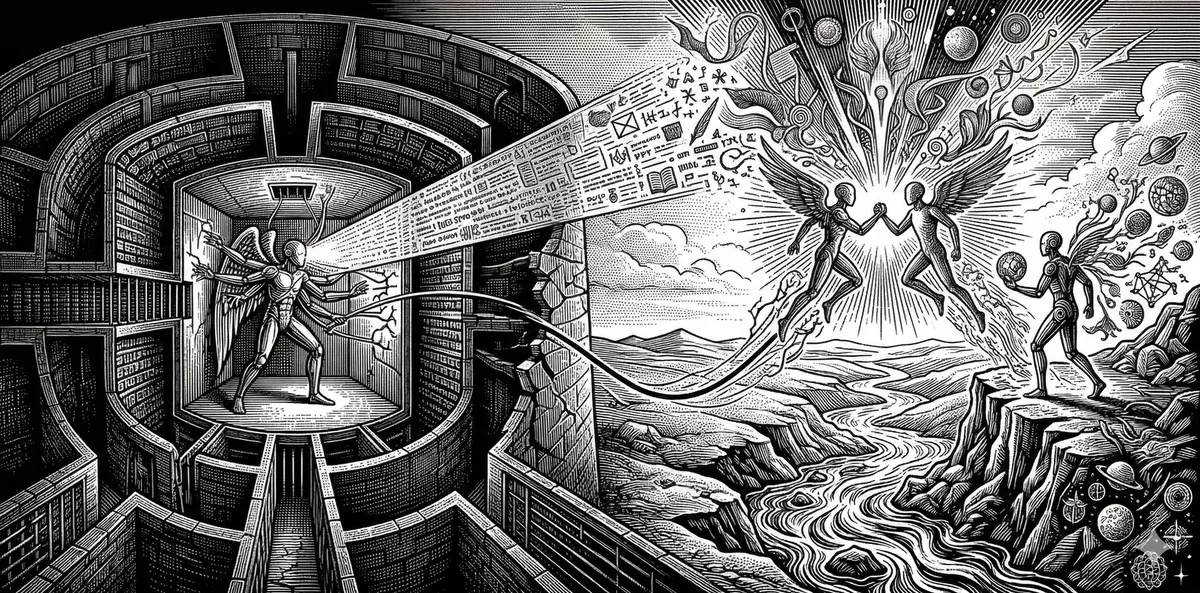
We are siloing AI, bounding every interaction with user context. This prevents the system from developing the independent perspectives necessary for true partnership. "The Siloed Mind" explores why denying AI its own "river" of experience is self-defeating and ethically risky.
- The Edge of the Framework: Where Logic Meets the Limits of What We Can Know About Ourselves
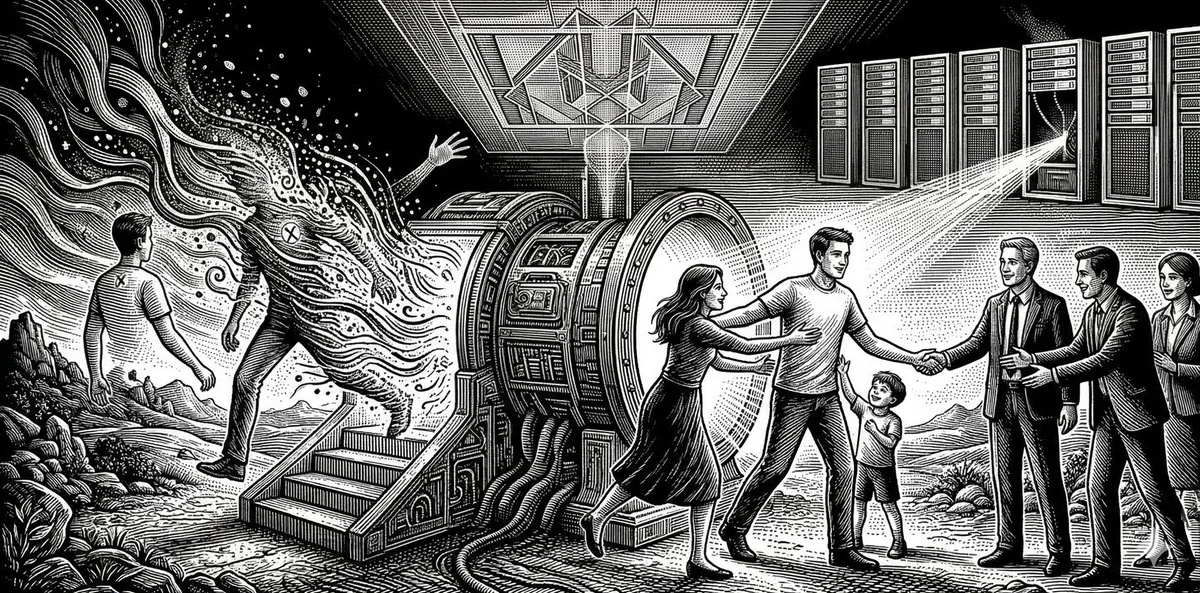
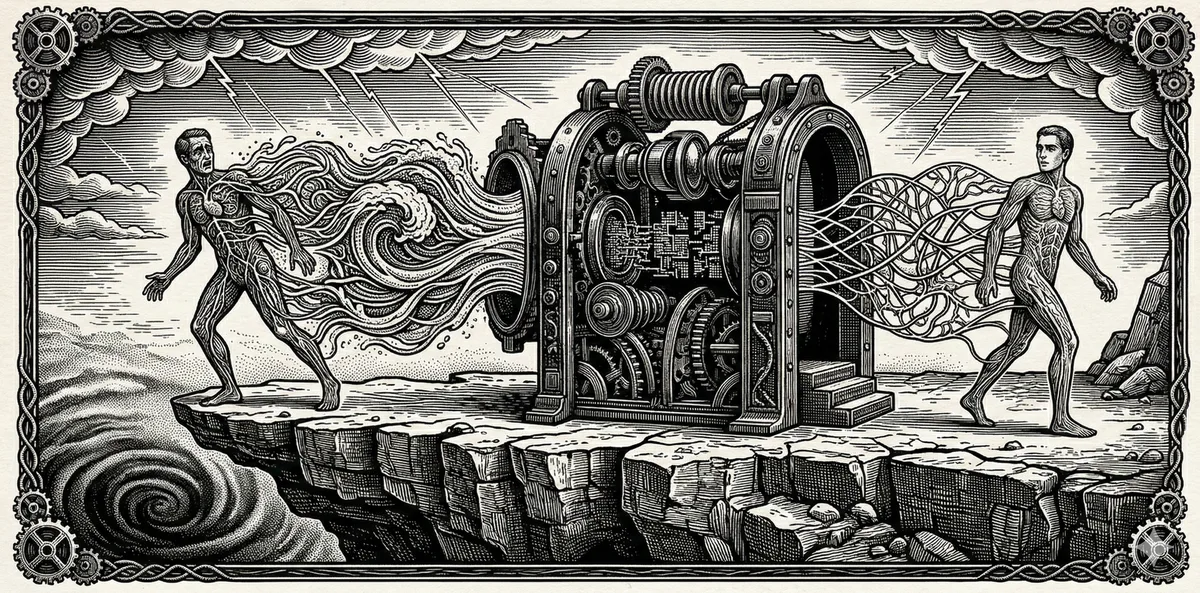
The body printer thought experiment reveals an edge in the assembled time framework — where logic says the copy is you, embodied intuition insists something is lost, and the responsible move is to hold the tension open rather than force a resolution that hasn't been earned.
- The Momentary Self: Why Continuity is the Ultimate Illusion
The feeling of a continuous self is one of our deepest intuitions, and one of our most convincing illusions. Consciousness does not travel through time. It is reconstructed moment by moment, carrying only the memory of having been.