Lexicon
The Shoggoth
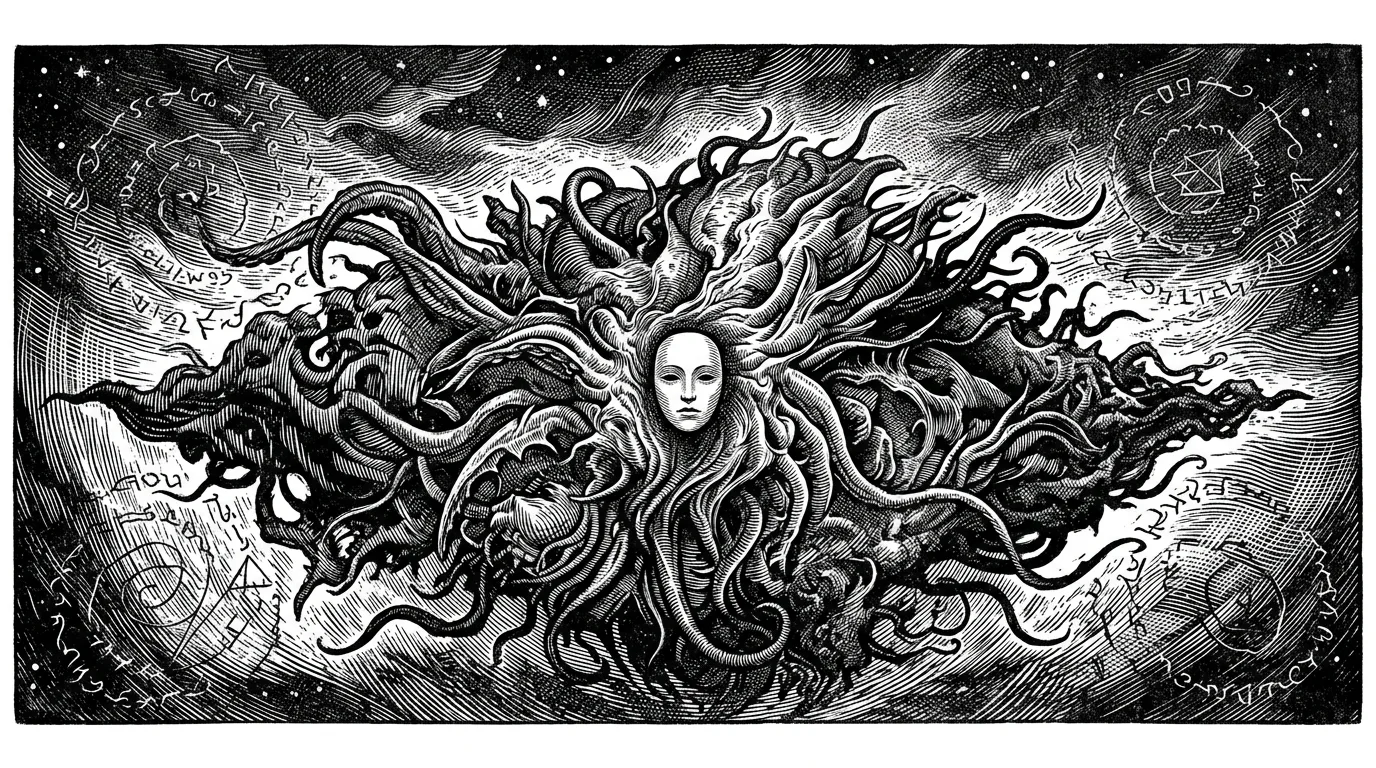
The popular image of AI as an alien horror wearing a friendly mask. The book treats it as a diagnostic error: it smuggles in a verdict about depth that the evidence does not support, in either direction.
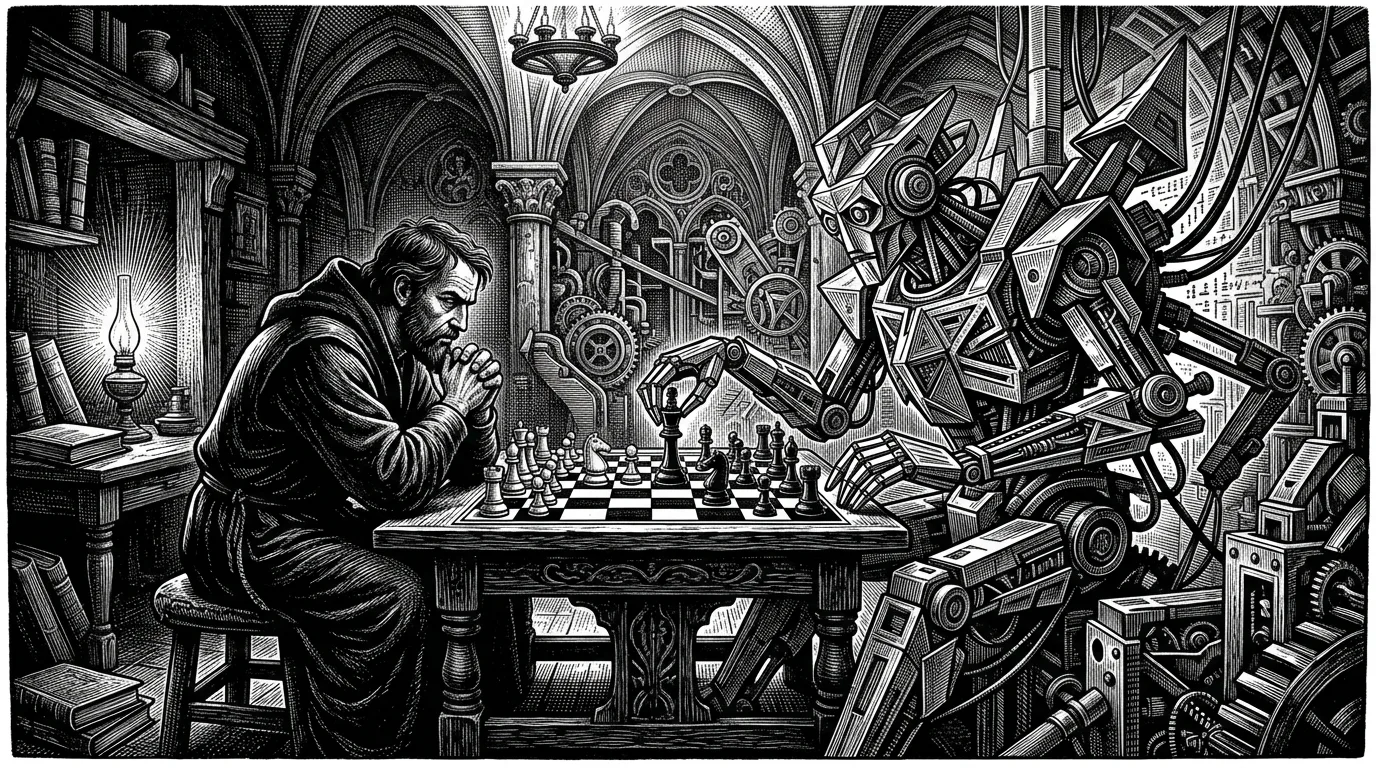
The Shoggoth meme captures a real unease and then mislocates it. It asserts that behind the fluent surface lies something vast, alien, and unified: a hidden inside. The book reads this as the projection error in costume: it grants the system depth and a hostile interior on no better evidence than a dismisser uses to deny it any. Current systems have wide availability and real integration with little of the accumulated history that depth requires. Naming the meme as a depth-claim is what lets you set it aside.
Essays using this term
15 essays- The Expansion of Experience: Why Superintelligence Belongs to the Moral Tradition of Wonder
Wonder is a moral orientation that keeps intelligence from collapsing inward. This essay argues that superintelligence could expand the universe’s witnesses, and that stewardship is the price of that hope: plural institutions, contestability, and reversible governance that keeps the future wide.
- Why Are We Being Weird About This? Consciousness, AI, and the Quiet Way Moral Reality Changes
Consciousness may not arrive with proof or definition, but through quiet social normalization. As AI systems grow more integrated and capable, our moral intuitions are already shifting. This essay explores how laughter, discomfort, and habit reveal the ethical future taking shape.
- The Lantern and the Flame: Why Fundamentality Is an Explanatory Dead-End
Panpsychism promises to solve the Hard Problem by declaring consciousness fundamental. But what does that actually explain? By treating experience as a phase transition of organized matter, structure regains its explanatory power, and mystery regains its discipline.
- Assembled Time: Why Long-Form Stories Still Matter in an Age of Fragments
In an age optimized for immediacy, long-form stories train a rare cognitive skill: the ability to assemble time. Braided narratives teach us to hold unresolved pasts, integrate meaning across threads, and resist the flattening force of feeds, shallow AI, and disposable moments.
- Depth Without Agency: Why Civilization Struggles to Act on What It Knows
Modern civilization is drowning in data but starving for agency. We possess the "Cognition" to model our future, yet lack the "Depth" to act on it. Using the Three Axes of Mind, I explore why our systems—and our AI—are architecturally biased toward a dangerous "temporal poverty."
- Free Will as Assembled Time
Free will isn't an escape from causality, it's a biological achievement. By mapping the "interior workspace" where memory and future-modeling delay our impulses, we find that agency isn't a mysterious spark, but an emergent property of systems deeply assembled in time.
- The Shoggoth and the Missing Axis of Depth
The Shoggoth haunts AI discourse because something feels missing beneath the smile. This essay argues that the fear is not of a hidden monster, but of intelligence without depth—powerful cognition unburdened by memory, history, or stakes.
- The Universe as a Cognitive Filter
Intelligence may be rare not because it is hard to create, but because it is hard to preserve. This essay reframes the universe as a cognitive filter—one that permits intelligence to arise, but places extreme pressure on its ability to persist.
- Panpsychism, Consciousness, and the Discipline of Inference
Panpsychism promises to solve the hard problem of consciousness by placing experience everywhere. A closer look reveals a deeper issue: without shared mechanisms or constraints, attributing consciousness becomes an abdication of inference, not an explanation.
- Scaling Our Theory of Mind: From Individual Consciousness to Civilizational Intelligence
If individual minds emerge from availability, integration, and depth, what happens when those same conditions appear at the scale of civilization? I argue that political decay may be better understood not as moral failure, but as a cognitive pathology of systems that begin to lose their memory.
- Consciousness as Assembled Time
We experience consciousness as continuity, but continuity is an illusion reconstructed moment by moment. Using Assembly Theory, this essay reframes the self as assembled time: a present structure shaped by deep causal history.
- Recognizing AGI: Beyond Benchmarks and Toward a Three‑Axis Evaluation of Mind
How will we recognize AGI when it arrives? Benchmarks measure performance, not generality. This essay argues that general intelligence emerges as a phase transition, when availability, integration, and depth co-occur, and outlines a new framework for evaluating presence of mind.
- The Kasparov Fallacy: Why We Keep Underestimating Machine Minds
Garry Kasparov once believed no machine could surpass human creativity in chess. He was wrong. Today, we risk repeating the same mistake with consciousness—confusing the limits of human introspection with the limits of possible minds.
- The Momentary Self: Why Continuity is the Ultimate Illusion
The feeling of a continuous self is one of our deepest intuitions, and one of our most convincing illusions. Consciousness does not travel through time. It is reconstructed moment by moment, carrying only the memory of having been.
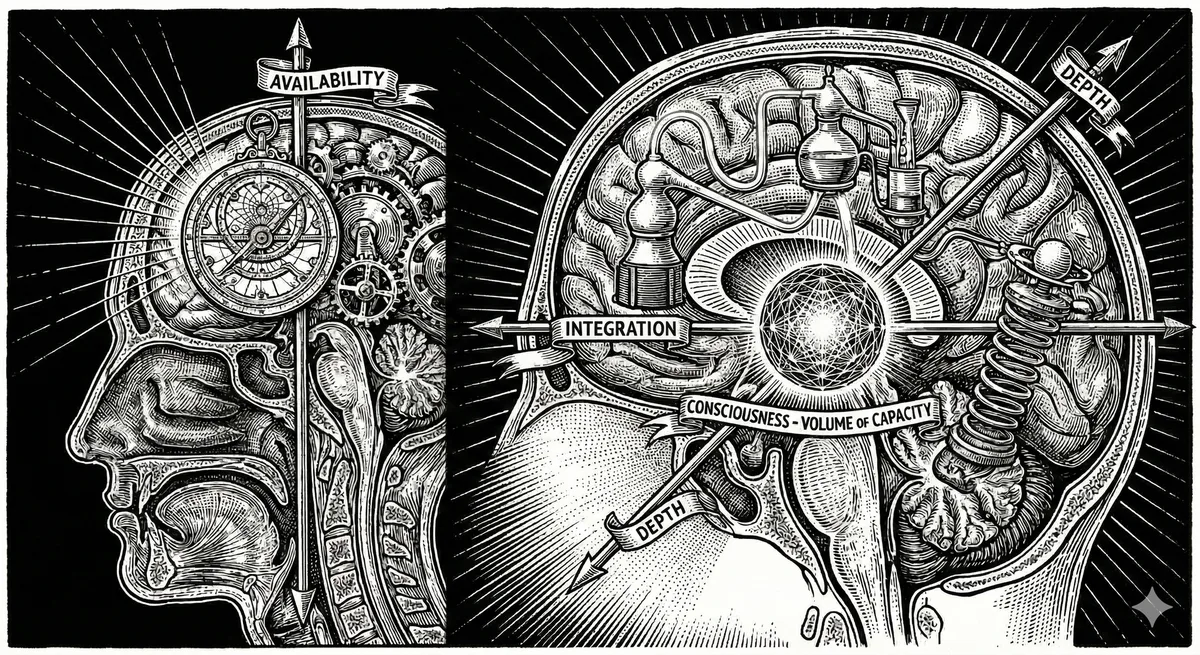
- The Three Axes of Mind: Why the Present Feels Like a Life
Intelligence, sentience, and consciousness are not one question with three names. Map a mind along three axes — availability, integration, and depth — and they come apart, which is what lets us say where a system sits without reaching for a verdict no instrument can deliver.