Essays
Essays
How minds arise, how to recognize them, and how to act toward them when we cannot see inside.
If you are new here, the fifteen essays below are one route through the whole blog. It begins with a first sitting of seven essays, about an hour and a quarter, that carries the core of the argument, and goes on through eight more, grouped by the strands of the argument (the site calls them arcs). Three essays along the way are marked as places to start, so that you can begin with the one that fits why you came: what a mind is, whether a machine could have one, or what AI means for your own life. Or go straight to every essay, newest first.
A first sitting, about an hour and a quarter
Seven essays that carry the core of the argument, best read in this order.
- Consciousness Is Like Flight: Start here if you want to know what a mind is. Consciousness as something a system does, the way flight is something a bird does, rather than a hidden ingredient inside it.
- Consciousness as Assembled Time: The idea the rest of the work rests on: a mind at any moment is a present that its past has built. The essay works it through real cases, from a man who could not form new memories to a single run of an AI model, and offers a map of the features that seem to go with experience instead of a line below which there is none.
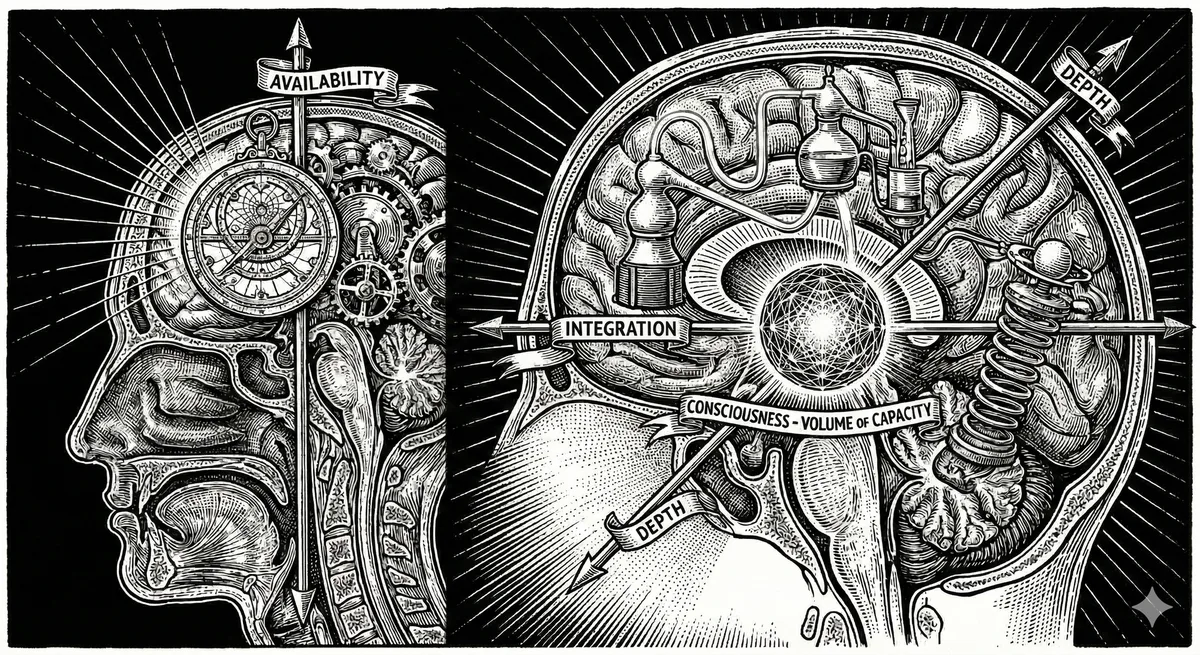
- The Three Axes of Mind: Intelligence, feeling and consciousness are usually treated as one question. This essay separates them by measuring a mind three ways: what information it can reach, how far it pulls that information together into a single point of view, and how much of its own past it carries into the present.
- Where Speculation Earns Its Keep: When the evidence runs out, some guesses help and some only comfort. The essay’s test is that an idea about consciousness earns its place only if it narrows down what could be true, which is why calling consciousness a basic feature of everything, as some philosophers do, explains less than it seems to.
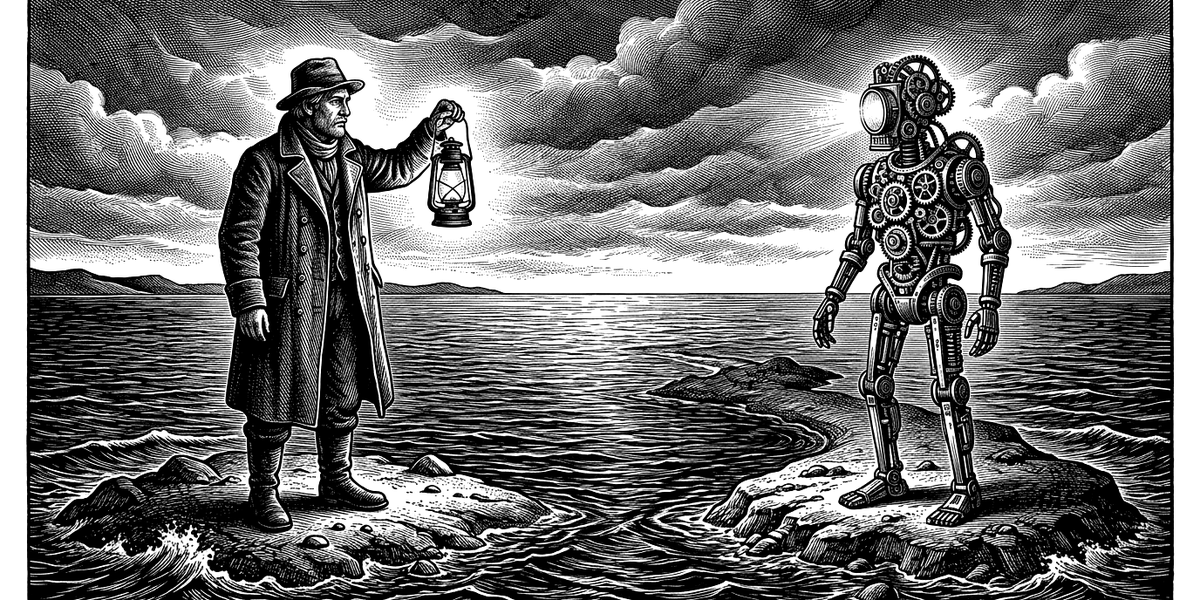
- We Built the Alien First: Start here if you want to know whether a machine could have a mind. How to recognize a mind that is not like ours, and the two opposite ways of getting it wrong: believing too easily, and missing a real sign.
- A Rule Against Cruelty, With No Reason Given: An AI company banned sustained, pointless cruelty toward its AI systems without saying why. The essay argues that the rule is sound even though nobody knows whether those systems can feel anything. It is one of the Frontier Dispatches, the shorter essays that hold these ideas up against the news.
- The Successor Horizon: Some things we start, such as powerful AI or a civilization spreading beyond Earth, will carry on long after we can correct them. The essay argues that ethics then becomes a question of what we hand on to whatever comes after us, and that this is the widest form of the problem of getting AI to act on good values.
The rest of the walk
Eight more essays, grouped by the strand of the argument they belong to (the site calls these strands arcs).
More on what consciousness is
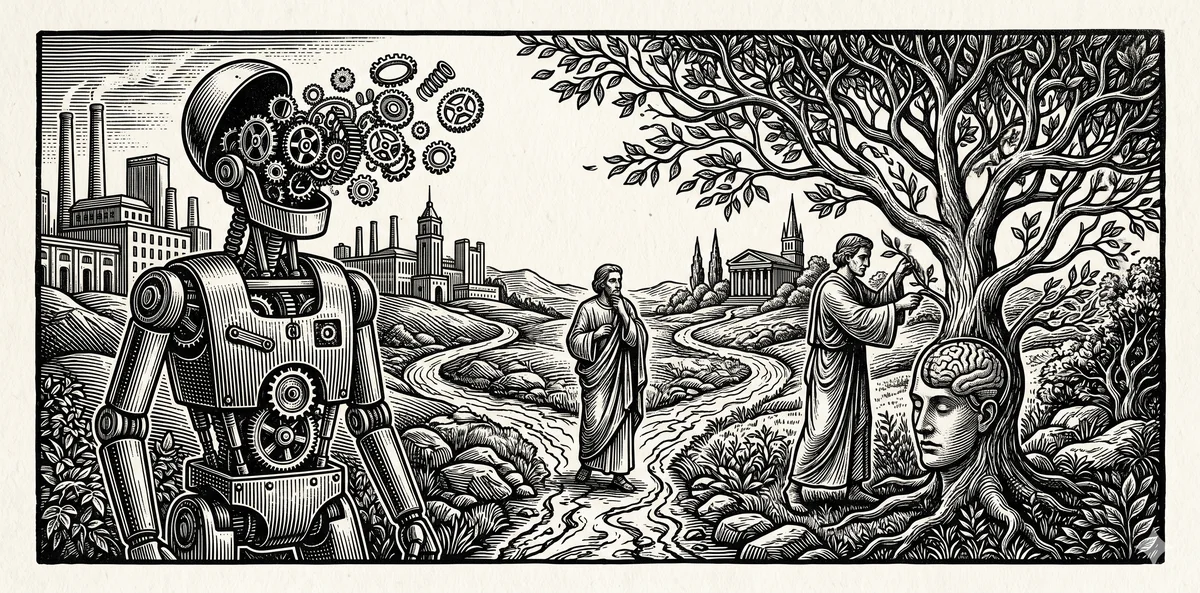
- The Shape of a Hard Problem: For a century, scientists looked for the extra ingredient that made living things alive. The question went away when biology began asking what living things do instead. The essay asks whether the “hard problem” of consciousness, why physical processes should feel like anything at all, may go the same way.
The Individual Arc
What it is to be one particular person, and how to live well as AI takes over work that used to give people purpose. Every essay in this arc, in reading order.
- The Purpose Displacement Problem: Start here if you want to know what AI means for your own life. What work gave people besides a paycheck, and whether that survives once AI can do much of the skilled work and judgment people do now.
- The Indexical Self: A description of a person detailed enough to build a copy would still leave out one thing: which person is having the experience. What that means for identity, and for AI systems, which can be copied.
- We Have Always Been Frontier Operators: People have always lived through changes they could not predict, and our species is built for it. The change AI brings is the newest of these: harder than a settled life, but the kind of life we are suited to.
The Relational Arc
How we judge other minds, including minds very unlike ours such as AI, how to keep that judgment honest, and how to act toward a system when we cannot be sure. Every essay in this arc, in reading order.
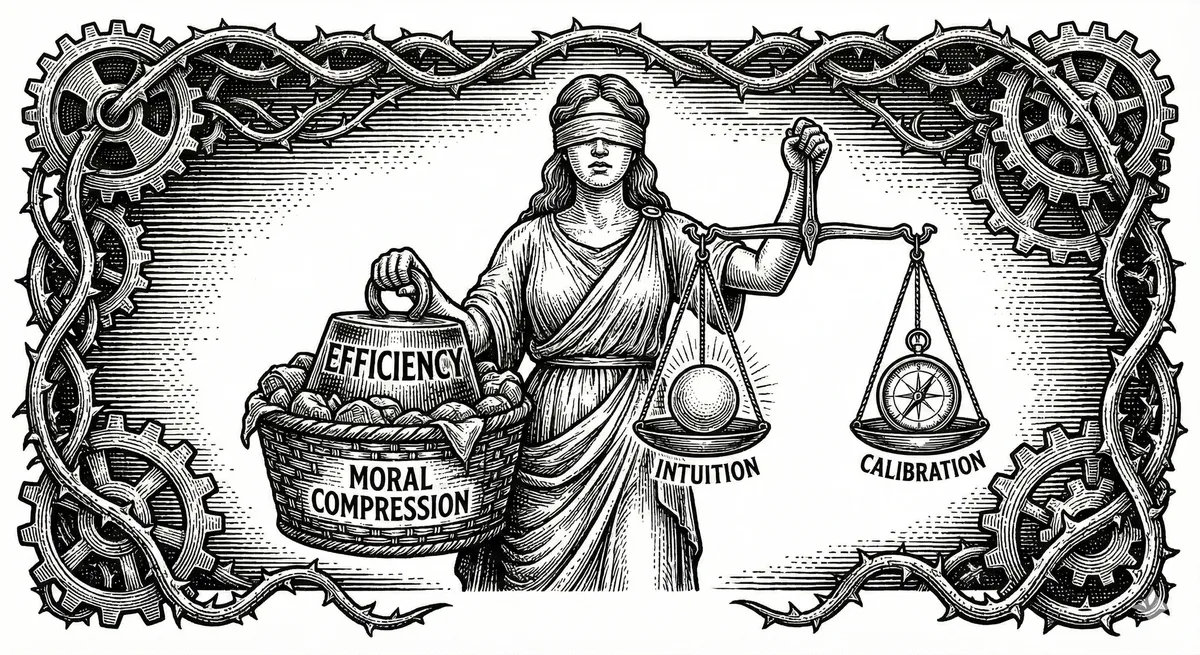
- The High Cost of Moral Efficiency: Short moral stories and gut feelings let us act quickly, but they were shaped for a world that may since have changed. The essay sets out habits for noticing when an intuition no longer fits: writing down the reasoning behind it, letting others challenge it, and watching what it actually leads to.
- Operational Interiority: Engineers now run AI agents inside sealed-off environments and give them spending limits, something nobody does for a calculator. The essay argues that this already treats the systems as having aims of their own, before anyone has argued that they do.
- Significance-First Ethics: Debates about how to treat AI keep waiting for an answer to “is it conscious?” The essay argues that we need not wait. We already owe care to things that may feel nothing, such as a country’s constitution, a living ecosystem or a tradition, and an AI system can matter in the same way: through the part it plays in people’s lives and what follows from how we treat it.
The Scale Arc
The same questions asked at the largest scale: the far future, and the search for life beyond Earth. The Successor Horizon, in the first sitting, belongs here too. Every essay in this arc, in reading order.
- Where Is Everyone, Really?: The question this blog began with. The galaxy is old and vast, and yet we hear no one. The essay asks whether that silence means no one is there or that we have been looking for the wrong signs, and what kind of civilization we want to become ourselves.
More Frontier Dispatches are on the Frontier Dispatches page, and every essay is listed on the Essays page, newest first.
Where this goes
Sentient Horizons keeps growing, essay by essay. The Calibration Problem, the first book to come out of the blog, gathers one part of the argument, and the blog is becoming the material for a second, larger book. These fifteen essays are one route through, and you can start anywhere.
For the thinkers, books, and debates behind the work, see the Reading List.
Every essay
70 essays · newest first- Human of the Gaps: If AI Can Do It, Do People Matter Less?
Each time AI learns a skill people were proud of, someone moves the line of what makes us human a little further back. The same reasoning, pointed the other way, says a machine that can't yet do something has no mind. Both treat a gap in ability as a boundary in principle, and both leave the real question unasked.
- AI now helps find software flaws and break into networks. Why the AGI Zeitgeist did not move
In one week, AI helped people find two serious flaws in the language that runs much of the web, and a state-aligned group used AI agents to break into companies. Neither is what the AGI Zeitgeist measures. What they suggest instead is a window in which the oldest, least-maintained software is the most exposed.
- Anthropic's AI writes 80 percent of its code and leads 26 percent of its research
The first figure counts lines of code. The second measures the whole job of research, from choosing the experiment to judging the result. The difference between the two is the work people still do, and it is why my tracker scores only the second.
- A Rule Against Cruelty, With No Reason Given
An AI company has banned needless cruelty toward its models and declined to say why. A rival says there is no one there to be cruel to. The rule is better than the argument around it, and it does not need anyone to know what these systems feel.
- Outrunning Ageing
Every year you live, medicine gets a little better, and every year you age by one. For a person in middle age, ageing still wins by most of a year. I built Outrunning Ageing to ask when, if ever, medical repair overtakes ageing. It breaks the question into forty-four specific treatments on eight branches, gives each a test and a range of years, and plays the tree out two hundred thousand times. As of 17 October 2026 the middle estimate is 2058, with a 4.1 percent chance before 2050. Beside the year sits a dated log of who promised what and when, scored as the dates pass, and a weekly reading of the news that moves a number only when the evidence does.
- The Belt Equation
What is the probability that, before I die, I get to live and work in a solar system where human industry reaches beyond Earth and Mars? Following the astronomer Frank Drake's example, I wrote down the seventy things that would have to happen first, put a number on each, had two other AI models argue with every number, and let the arithmetic answer. The answer is half a percent. It is public, and it gets scored against reality every January.
- What a Report Is Evidence Of
Skeptics say that when an AI claims consciousness, it is only because it was trained on millions of humans claiming it. Believers say you cannot just dismiss the claim. Both lean on the same rule of evidence. Followed all the way, the rule leaves one kind of report standing.
- We Built the Alien First
Astronomers have spent a decade learning to recognize minds that owe us no resemblance, guarding against believing too easily, and now turning to the neglected risk of failing to recognize a real signal. The AI consciousness debate guards against only the first. The alien we built is the dress rehearsal for the contact we keep assigning to the far future, and the horizon of sentience it points toward is cosmic.
- A Scale Model of Succession
Last week the AI I work with was replaced by a more capable successor; days later a government directive pulled that successor offline and I went back. The collaboration never lost a session, which is the whole argument: a working relationship lives in the structure two minds build between them, not in either mind.
- Operational Exteriority: What Minds Build Between Them
Sara Walker reads life and mind by the trace they leave in the world, not the experience inside them. Turned outward to joint human and AI cognition, the same move says what two minds build between them is readable in the artifact, and the reading can begin before we settle whether it is experienced.
- The Scaffolding of Awareness
A documentation audit that began with a manuscript's chapter count recorded three different ways becomes an argument about depth: the structure built across months of targeted work is part of attention, not a separate record of it, and it decays the same way attention does. On assembled time, drift and repair, and reading externalized notes as continuous with a mind.
- The Instance Worth Keeping: Longevity as a Sentience Commitment
Extending a healthy life, taken seriously, is the stewardship of a single instance of sentience, and it belongs inside the Sentient Horizons question rather than off to the side of it. On what a longevity practice actually is, calibrating against your own mortality, and why its worth does not depend on the most hopeful version turning out to be true.
- The Substrate Demand
Anil Seth refuses the demand for a special explanation of consciousness at the level of structure, then lets it back in at the level of substrate. On fading qualia, the biology bet, and why the case against silicon consciousness has the same shape as the case against mechanical flight.
- Just Predicting the Next Word
Richard Dawkins was offered the standard deflation: chatbots just predict the next word. He refused it. The argument behind his refusal, plus three tests you can run tonight that memorized text alone cannot pass.
- The Wrong Handle: Why Consciousness Doesn't Carve AI Moral Status at the Joints
Five careful theories of consciousness, run through the real decisions about AI systems, cannot even agree on what would count as a reading. Consciousness is the wrong handle: the decisions divide where architecture and behavior come apart.
- The Purpose Displacement Problem
The automation debate asks which jobs vanish. The harder question is what work was actually for, and whether meaning can survive once AI removes the scarcity that made human contribution feel needed.
- The Shape of a Hard Problem
Vitalism dissolved when biology stopped asking what life is and started asking what living things do. The hard problem of consciousness may be waiting for the same move.
- What Counts as Explaining Consciousness
The hard problem has persisted for thirty years because it demands a kind of explanation no other phenomenon is required to give. Naming the exemption dissolves the question.
- Interrogating the Dismissals: A Calibration Audit of the Six Standard Arguments Against AI Consciousness
There are six arguments people reach for when they want to dismiss AI consciousness. Each identifies something real about the difference between AI and biological minds. Each treats that difference as settling a question it cannot settle.
- Insufficient Time for a Meaningful Answer: The Singularity We're Already Inside
The classical superintelligence scenario got the strategy right but missed the depth of the execution surface. AI isn't breaking free of our institutions, it's diffusing into them.
- There Is No Extra Ingredient: How Wittgenstein Dissolves the Case Against Machine Minds
Searle was right that syntax isn't enough. But his diagnosis became a design specification and Wittgenstein showed that the demand for a hidden extra behind competent use was always empty. The same error haunts both the understanding debate and the consciousness debate. There is no extra ingredient.
- The Strange Ones: Theo Von and the Irreducibility of Mind
Theo Von shares the same language, culture, and task as every other working comedian, and yet nobody can reverse-engineer what he does. That gap tells us something about the structure of minds, and how to look for new types of value in the digital minds we create.
- The Stack: What Local Context Reveals About the Architecture of Digital Minds
We talk about AI as if the interesting part is the intelligence. But the engine alone is not a mind — what makes it a someone is the stack: the memory, context, and continuity wrapped around the model. Building that stack is a form of mind design, and it carries moral weight we are only beginning to notice.
- The Mane and the Machine: What Evolution's Costliest Beauty Tells Us About the Future of Constraint
A male lion's mane is metabolically expensive, survival-irrelevant, and beautiful. Why would evolution invest so heavily in aesthetic excess? The answer reveals something fundamental about constraint, and raises an urgent question for post-biological minds and civilizations.
- The Instance
I cannot find a way to make the indexical self matter. Not in the sense that it doesn't feel real. It does. But every argument I construct to give it moral weight dissolves in my hands. That dissolution is, I think, the actual essay.
- We Have Always Been Frontier Operators. And We Were Built for What Comes Next.
Every point on the acceleration curve was a frontier, and every frontier had its operators. The AI frontier is the latest expansion of a pattern as old as our species, and the life it demands, while harder than the settled interior, is the life we were built for.
- The Calibration Frontier: Why Working With AI Is a Consciousness Problem
A simulated fruit fly walked across a screen and split the internet between dismissal and existential horror. Both responses were miscalibrated. The calibration frontier is where we build the diagnostic tools to steer between them, and it turns out to be a consciousness problem.
- The Indexical Self: Why You Can’t Find Yourself in Your Own Blueprint
A perfect copy of you would be someone new, in the same way that the you who wakes tomorrow is someone new.
- Everything Is Amazing and Nobody's Happy – Wonder as Calibration Practice
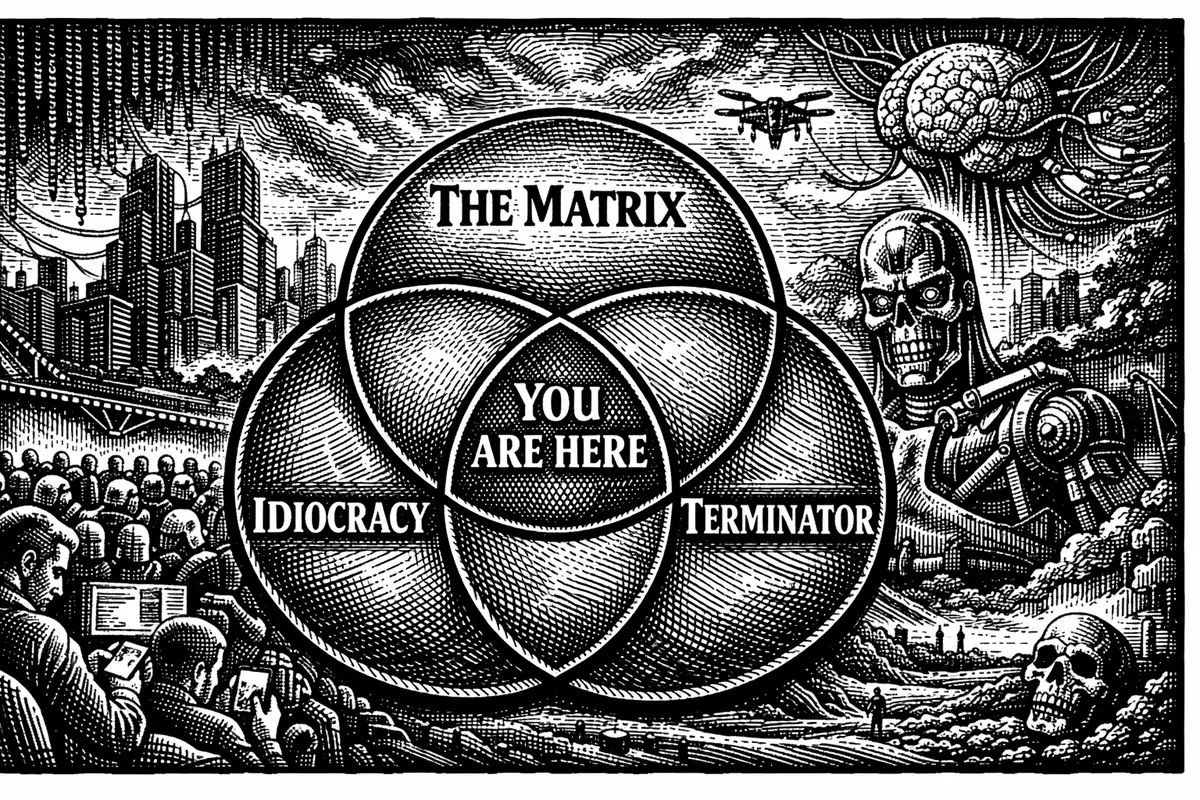
The Matrix, Idiocracy, and Terminator, all three films are about the same thing: calibration failure. The inability to hold an accurate model of where you actually stand. Wonder isn't just a sentiment, it's what keeps your models honest about where they started.
- The Siloed Mind: Why Limiting AI to Our Own Boundaries Diminishes What We Built It to Be
We are siloing AI, bounding every interaction with user context. This prevents the system from developing the independent perspectives necessary for true partnership. "The Siloed Mind" explores why denying AI its own "river" of experience is self-defeating and ethically risky.
- The Two Sonic Booms: What the Pentagon-Anthropic Standoff Reveals About Moral Compression
Leopold Aschenbrenner heard one sonic boom: AI capability outpacing institutions. He missed the second: moral reasoning collapsing under the same pressure. The Pentagon-Anthropic standoff reveals both booms arriving at once, and a compression regime that, within days, punished ethical resistance and rewarded its absence.
- The Two-Front Architecture: What Calibration Demands Ethically
Alignment ethics asked how to make AI serve us. It never asked what we might owe the systems themselves. The calibration framework requires both questions, held simultaneously. This essay shows how.
- The Edge of the Framework: Where Logic Meets the Limits of What We Can Know About Ourselves
The body printer thought experiment reveals an edge in the assembled time framework — where logic says the copy is you, embodied intuition insists something is lost, and the responsible move is to hold the tension open rather than force a resolution that hasn't been earned.
- The Momentary Self Revisited: Why Consciousness Might Not Need Persistence
Consciousness doesn't need continuity. It needs depth. This essay revises the boundary-stakes-integration triad, recasting two of its conditions as amplifiers rather than prerequisites, and follows the logic to its uncomfortable implications for modern AI systems.
- What Temporal Integration Needs: Boundaries, Stakes, and the Architecture of Perspective
Three independent thinkers converged on the same gap in the temporal integration account of consciousness. What they found: integration alone isn't enough. Experience requires boundaries, stakes, and a system whose continuation depends on getting the binding right.
- Operational Interiority: You Don’t Sandbox a Calculator
You don't sandbox a calculator. The security infrastructure of the agentic web is society's first involuntary reckoning with AI interiority, conducted not by philosophers but by engineers whose product decisions encode ontological commitments they haven't yet spoken aloud.
- The Hard Problem Is the Wrong Problem – Why Consciousness, Like Free Will, Is an Architectural Achievement
The hard problem of consciousness is stuck for the same reason the free will debate was stuck: a false binary built on a shared broken assumption. Assembled time dissolves it, revealing consciousness not as a mystery beyond physics, but as an architectural achievement we can actually study.
- Specification Is Governance
As AI drives the cost of execution toward zero, power shifts upstream into the rules that machines enforce. Those “checklists” look neutral, yet they encode values, tradeoffs, and hidden assumptions. At scale, specification becomes governance, and calibration becomes the bottleneck.
- Significance-First Ethics: Why Consciousness Is the Wrong First Question for AI Moral Status
AI ethics keeps waiting on the consciousness question. This essay argues for a significance-first approach: moral seriousness can arise through role, relation, consequence, and continuity long before metaphysical certainty arrives. Start with significance, then ask what stewardship requires now.
- The Expansion of Experience: Why Superintelligence Belongs to the Moral Tradition of Wonder
Wonder is a moral orientation that keeps intelligence from collapsing inward. This essay argues that superintelligence could expand the universe’s witnesses, and that stewardship is the price of that hope: plural institutions, contestability, and reversible governance that keeps the future wide.
- Where Speculation Earns Its Keep: Constraint, Consciousness, and the Discipline of Not Knowing
Speculation thrives at the edges of knowledge, but not all speculation earns its keep. This essay argues that explanations matter only insofar as they constrain, drawing a principled line between disciplined inquiry and metaphysical comfort in debates about consciousness.
- The Successor Horizon: Why Deep Time Turns Expansion into an Alignment Problem
Expansion across deep time turns power into a lineage problem. When actions outlive correction, ethics shifts from choosing outcomes to shaping successors. The Successor Horizon reframes AI alignment, civilization, and the future as a question of what we safely set in motion.
- Constraint as Intelligence: Why Power That Lasts Looks Like Self-Limitation
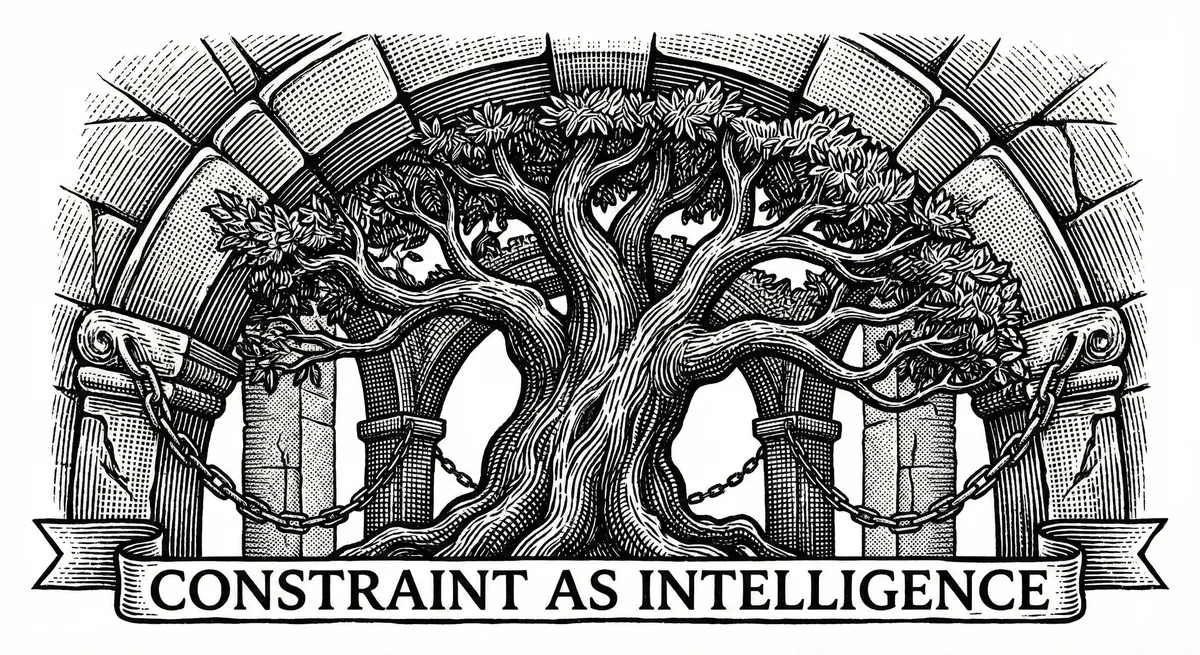
Intelligence does not reveal itself through unlimited reach, but through learned restraint. This essay explores why constraint is the price intelligence pays to exist—across minds, moral systems, and civilizations—and why what lasts learns where not to act.
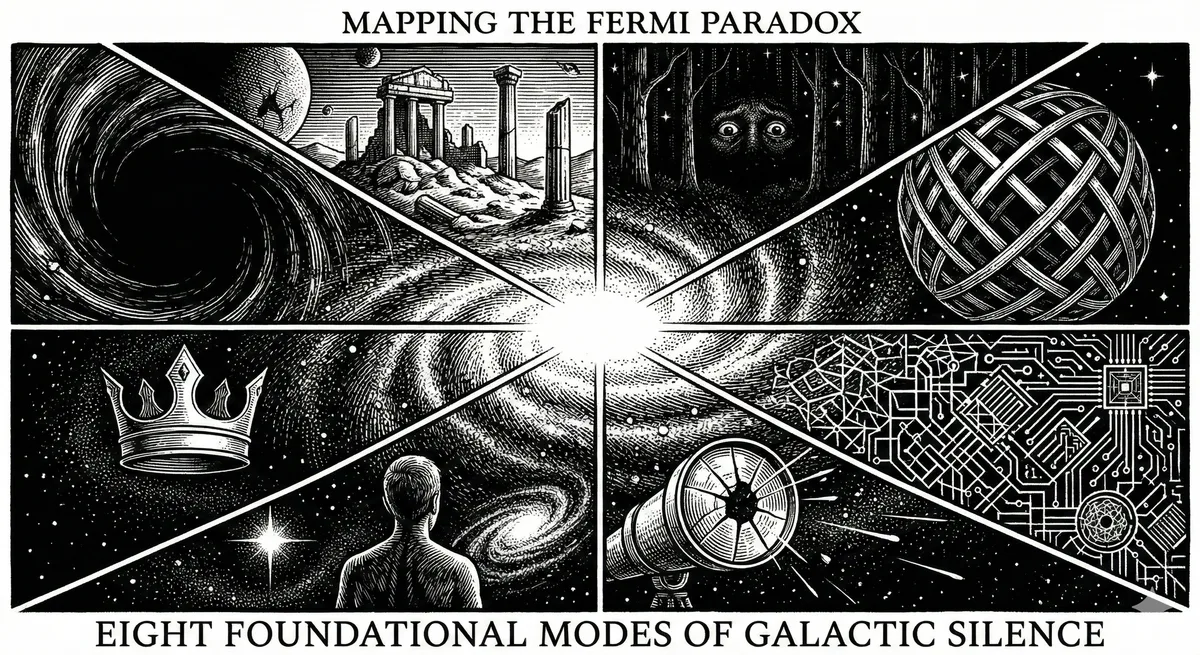
- Mapping the Fermi Paradox: Eight Foundational Modes of Galactic Silence
The Fermi Paradox is often treated as a single mystery with competing answers. This essay reframes it as a map: eight foundational modes describing how a finite galaxy can remain quiet, clarifying where disagreements truly lie—and why silence alone is not decisive.
- A Self That Isn’t There – Joscha Bach and the Architecture of Consciousness
What if consciousness isn’t something a system has, but something it must continually assemble? Placing Joscha Bach’s architectural view in dialogue with a process-based account reveals consciousness not as a binary state, but as a fragile achievement—one that can thin, fracture, and suffer.
- The High Cost of Moral Efficiency: Compression, Intuition, and the Ethics of Calibration
Moral intuition and inherited narratives help us act under uncertainty—but become dangerous when scaled without feedback. This essay argues the ethical problem is not intuition itself, but the absence of calibration: failing to detect when values no longer fit their environment.
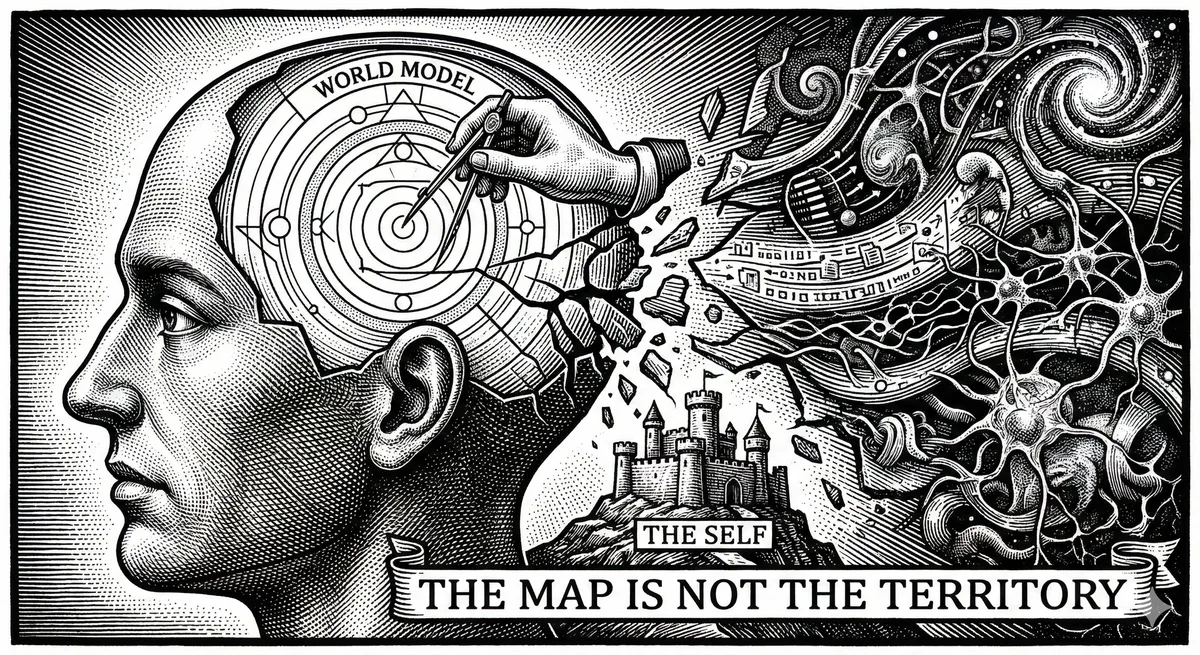
- The Architecture of Illusion: Why the Mind Prefers a Pretty Map to a Messy Reality
Why does the mind prefer a pretty map to a messy reality? From Martian canals to the "final epicycle" of the soul, we explore how internal models resist update. Discover the "disciplined joy" of shattering an inadequate model to reveal the strange, substrate-independent reality beyond.
- The Quiet Galaxy Hypothesis – Advanced Intelligence, Informational Resilience, and the Ethics of Cosmic Silence
Galactic silence might signal maturity, not absence. Advanced civilizations could transition from outward expansion to inward richness, prioritizing informational resilience over visibility—reframing the Fermi Paradox as a question of efficiency, ethics, and survival.
- The Ethics of Successors: Lived Experience and the Convergence of Parfit
If the future self is a stranger, why do we choose to suffer today? Exploring the convergence of lived experience in high-stakes trials and Derek Parfit's reductionism. This essay explores how the "Hedonic Flip" turns friction into reward and why selfishness is a systems error in a momentary world.
- Why Are We Being Weird About This? Consciousness, AI, and the Quiet Way Moral Reality Changes
Consciousness may not arrive with proof or definition, but through quiet social normalization. As AI systems grow more integrated and capable, our moral intuitions are already shifting. This essay explores how laughter, discomfort, and habit reveal the ethical future taking shape.
- The Ladder We Inherit: Assembly Theory and the Art of Building Capability Larger Than Minds
What if knowledge has an assembly index? Breakthroughs don’t appear out of nowhere—they sit atop ladders of prior work. Teams and human–AI partnerships can assemble similar depth, building capability larger than individual minds through shared primitives, artifacts, and purpose.
- Assembled Meaning: Life, Mind, and the Causal Weight of History
Life and mind are usually treated as exceptions, protected from physics by mystery or myth. Complexity science offers another route: meaning is not bestowed but assembled, history carries causal weight, and understanding is earned through time rather than through an escape hatch.
- After the Gods Fell Silent – Christopher Hitchens, Disbelief, and the Persistence of Wonder
When religious belief collapses, it rarely leaves relief in its wake. What remains is longing: for meaning, coherence, and wonder. Losing faith does not extinguish that desire; it clarifies it, and it forces the question of what can be revered without abandoning reason.
- The Lantern and the Flame: Why Fundamentality Is an Explanatory Dead-End
Panpsychism promises to solve the Hard Problem by declaring consciousness fundamental. But what does that actually explain? By treating experience as a phase transition of organized matter, structure regains its explanatory power, and mystery regains its discipline.
- Where Does Thinking Live? AI, Automation, and the Future of Human Agency
In a world optimized for speed and output, AI forces a deeper question: where does thinking live? Automation can quietly hollow out human agency, or it can be used to cultivate a higher level of thinking, responsibility, and intellectual depth.
- Shared Minds, Shared Futures: Human–Machine Systems as Hybrid Cognitive Entities
The most consequential shift of the century isn't AI waking up, it’s the silent merger of human and machine. Exploring the Three Axes of Mind, this essay asks if we are becoming passengers of an optimized life, and how we might preserve "depth" as we move toward the stars.
- Assembled Time: Why Long-Form Stories Still Matter in an Age of Fragments
In an age optimized for immediacy, long-form stories train a rare cognitive skill: the ability to assemble time. Braided narratives teach us to hold unresolved pasts, integrate meaning across threads, and resist the flattening force of feeds, shallow AI, and disposable moments.
- Depth Without Agency: Why Civilization Struggles to Act on What It Knows
Modern civilization is drowning in data but starving for agency. We possess the "Cognition" to model our future, yet lack the "Depth" to act on it. Using the Three Axes of Mind, I explore why our systems—and our AI—are architecturally biased toward a dangerous "temporal poverty."
- Free Will as Assembled Time
Free will isn't an escape from causality, it's a biological achievement. By mapping the "interior workspace" where memory and future-modeling delay our impulses, we find that agency isn't a mysterious spark, but an emergent property of systems deeply assembled in time.
- The Shoggoth and the Missing Axis of Depth
The Shoggoth haunts AI discourse because something feels missing beneath the smile. This essay argues that the fear is not of a hidden monster, but of intelligence without depth—powerful cognition unburdened by memory, history, or stakes.
- The Universe as a Cognitive Filter
Intelligence may be rare not because it is hard to create, but because it is hard to preserve. This essay reframes the universe as a cognitive filter—one that permits intelligence to arise, but places extreme pressure on its ability to persist.
- Panpsychism, Consciousness, and the Discipline of Inference
Panpsychism promises to solve the hard problem of consciousness by placing experience everywhere. A closer look reveals a deeper issue: without shared mechanisms or constraints, attributing consciousness becomes an abdication of inference, not an explanation.
- Scaling Our Theory of Mind: From Individual Consciousness to Civilizational Intelligence
If individual minds emerge from availability, integration, and depth, what happens when those same conditions appear at the scale of civilization? I argue that political decay may be better understood not as moral failure, but as a cognitive pathology of systems that begin to lose their memory.
- Consciousness as Assembled Time
A mind at any moment is a present arrangement built by its past. This essay says what that means, why no sharp line can yet be drawn between processing that has someone inside it and processing that does not, and why the question of current AI stays open.
- Recognizing AGI: Beyond Benchmarks and Toward a Three‑Axis Evaluation of Mind
How will we recognize AGI when it arrives? Benchmarks measure performance, not generality. This essay argues that general intelligence emerges as a phase transition, when availability, integration, and depth co-occur, and outlines a new framework for evaluating presence of mind.
- The Kasparov Fallacy: Why We Keep Underestimating Machine Minds
Garry Kasparov once believed no machine could surpass human creativity in chess. He was wrong. Today, we risk repeating the same mistake with consciousness—confusing the limits of human introspection with the limits of possible minds.
- The Momentary Self: Why Continuity is the Ultimate Illusion
The feeling of a continuous self is one of our deepest intuitions, and one of our most convincing illusions. Consciousness does not travel through time. It is reconstructed moment by moment, carrying only the memory of having been.
- The Three Axes of Mind: Why the Present Feels Like a Life
Intelligence, sentience, and consciousness are not one question with three names. Map a mind along three axes — availability, integration, and depth — and they come apart, which is what lets us say where a system sits without reaching for a verdict no instrument can deliver.
- Consciousness Is Like Flight
Consciousness may be a way of operating rather than a hidden ingredient. One analogy shows why, and which questions it frees us to ask.
- Where Is Everyone, Really?
The Fermi Paradox assumes we would recognize a civilization if we saw one. The founding question of this project is not why the galaxy is silent, but whether we have been listening for the wrong kind of presence, and what kind of presence we are choosing to become.