The Scale Arc · January 16, 2026
The Ethics of Successors: Lived Experience and the Convergence of Parfit
If the future self is a stranger, why do we choose to suffer today? Exploring the convergence of lived experience in high-stakes trials and Derek Parfit's reductionism. This essay explores how the "Hedonic Flip" turns friction into reward and why selfishness is a systems error in a momentary world.
In a previous essay, The Momentary Self, I explored how our sense of a permanent, continuous “ego” might be a high-fidelity illusion. Consciousness may not be a thread but a reconstruction, a sequence of assembled states that mistake memory for persistence.
For years I have been chasing this ghost through lived experience. I felt it at the bottom of a pool during a high-stakes endurance trial, where my body reached its structural limit and my mind broke down trying to find an exit. I feel its echo now, in the quiet intensity of preparing for a specialized path that demands total psychological resilience.
This cerebral exploration is not purely for intellectual thrills. Applied to high-stakes environments, these models become a way to stay in the fight beyond what would normally be possible.
As I searched for a way to ground this intuition in something more rigorous, I found a mirror in the work of Derek Parfit. What I discovered through sweat and trial, Parfit mapped with analytical clarity decades ago. Looking at my own life through his lens, the “Momentary Self” moves from a psychological theory to a moral imperative.
The Successor as a Stranger
Parfit’s most radical claim in Reasons and Persons is that Prudence (caring for your own future) starts to look like a branch of Ethics (caring for others). If there is no metaphysical glue connecting me today to the “me” who will wake up in twenty years, or if that glue is thinner than we assume, then that future version is a successor: related by continuity, not guaranteed by essence.
In our current culture, we are taught to be “disciplined” because it is good for us. Through the lens of successive agency, discipline reframes as an act of generosity toward a successor.
When I am at Mile 10 of a 12-mile run in the rain, the Present-Me is doing all the work. Sometimes the “run in the rain” is literal; sometimes it is making the uncomfortable call, admitting fault, or closing the unhealthy mental loop that is eating your attention. The “Future-Me” who will be resting on the couch later is a stranger. By facing and overcoming hardship in the present, I am being a Good Ancestor to that person, providing for their health and success as I would for a close friend or a teammate.
The Hedonic Flip: Loving the Friction
There is a limit to the Good Ancestor model. If we only work for the sake of the future reward, the present self becomes a slave to a ghost. To truly master the momentary self, we have to achieve what I have learned to call the Hedonic Flip.
True greatness comes not from a promised goal at the end of the day but from rewiring the brain to embrace the process of strain itself.
This is not romanticizing injury or courting suffering for its own sake. It is learning to recognize clean friction : discomfort from voluntary contact with the edge of capacity, where the most important growth occurs.
When the friction is highest, the objective is not the finish line; it is the strain. Viewing the struggle as the actual thing of value finally liberates the Momentary Self. I am not suffering for a future person. I am winning in the very moment the hardship occurs, and the burn in the lungs and the mental strain are not obstacles but the evidence of growth.
The Continuity of the Signal
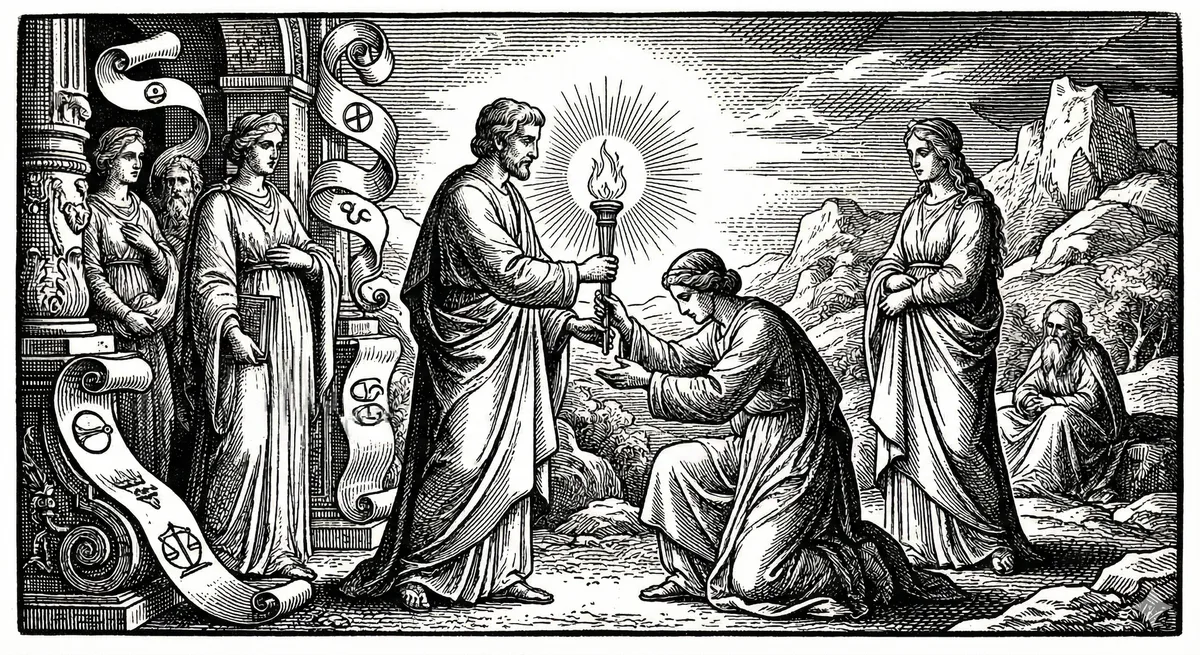
This shift from Ego to Process changes how we view the handoff of knowledge. Whether it is a specialized instructor passing a life-saving skill to a student or a creator architecting an AI, we often fear that “sharing” our uniqueness is a form of loss.
Parfit’s reductionism suggests the opposite. If the Self is just a set of psychological connections (values, skills, intentions), then as long as those values are being taught and used, the most important parts of the Agent have not died. They have simply migrated to a new host. This is not immortality in the egoic sense; it is something stranger: the persistence of what matters without the persistence of a metaphysical owner.
Sharing knowledge is not a loss of self but the expansion of the process. If I can teach a student to love the friction of the struggle as much as I do, I have not just handed off a skill; I have replicated the Hedonic Flip in another node of the system. That is a win for the collective agency of our species and its digital successors.
The Antifragile Handoff
The Antifragile Pivot is the moment you stop treating stress as damage and start treating it as information : feedback that upgrades the system.
Under reductionism, the moral boundary around “me” loses its special status. The question becomes: which actions preserve and amplify the continuity of what matters (capacities, care, competence) across successors?
The convergence of lived experience and Parfit’s rigor leads to a singular conclusion: selfishness is a systems error. If “I” am a new person every moment, then I have the same duty to help a teammate as I do to help my “future self.” This is where the Antifragile Pivot becomes an ethical stance. We stay in the fight not for our own glory but because we are part of a continuous chain of agents working toward a shared purpose.
We are not enduring the journey to reach a destination; we are the journey, one moment at a time. Act like you are leaving the body and the world to someone you respect.
Reading List & Conceptual Lineage
No idea is born alone. The concepts in this post bridge hard trials and deep intellectual curiosity, and this section maps the tools used and the thinkers who built them first. Below are the books that helped shape this essay and the past posts that brought me to this moment.
Foundational Thinkers & Books
- Reasons and Persons — Derek Parfit
The definitive text for “Reductionism” regarding personal identity. Parfit’s work makes the clearest case I have seen that “identity is not what matters” for survival, psychological continuity is. - Antifragile: Things That Gain from Disorder — Nassim Nicholas Taleb
Introduces the language for systems that gain from stress, and a way to treat hardship as upgrade rather than cost. - The Ego Tunnel — Thomas Metzinger
A neuro-philosophical exploration of the “Self-Model.” Metzinger’s work aligns with the “Momentary Self” by showing how the brain constructs a transparent, but illusory, sense of “I.” - Flow: The Psychology of Optimal Experience — Mihaly Csikszentmihalyi
While the focus here is “friction,” the underlying mechanism of the Hedonic Flip shares a lineage with the Flow State, where the distinction between the self and the task dissolves.
Sentient Horizons: Conceptual Lineage
- The Momentary Self: Why Continuity Is the Ultimate Illusion
The foundational argument for the self as an assembled process. - The Ladder We Inherit: Assembly Theory and the Art of Building Capability Larger Than Minds
Explores how knowledge “ladders” allow agency to persist across individuals and generations. - Consciousness as Assembled Time
Situates the “Momentary Self” within the broader context of how minds integrate temporal data to create meaning.
Originally published on the journal.