The Argument
The Scale Arc
“What kinds of systems can sustain coherent agency across deep time?”
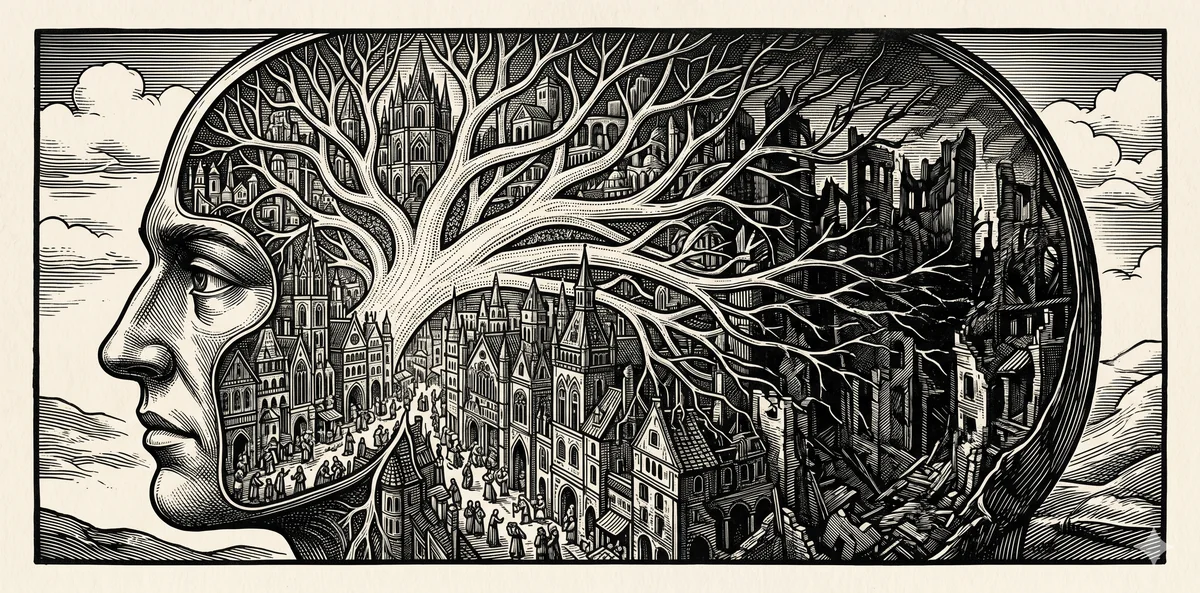
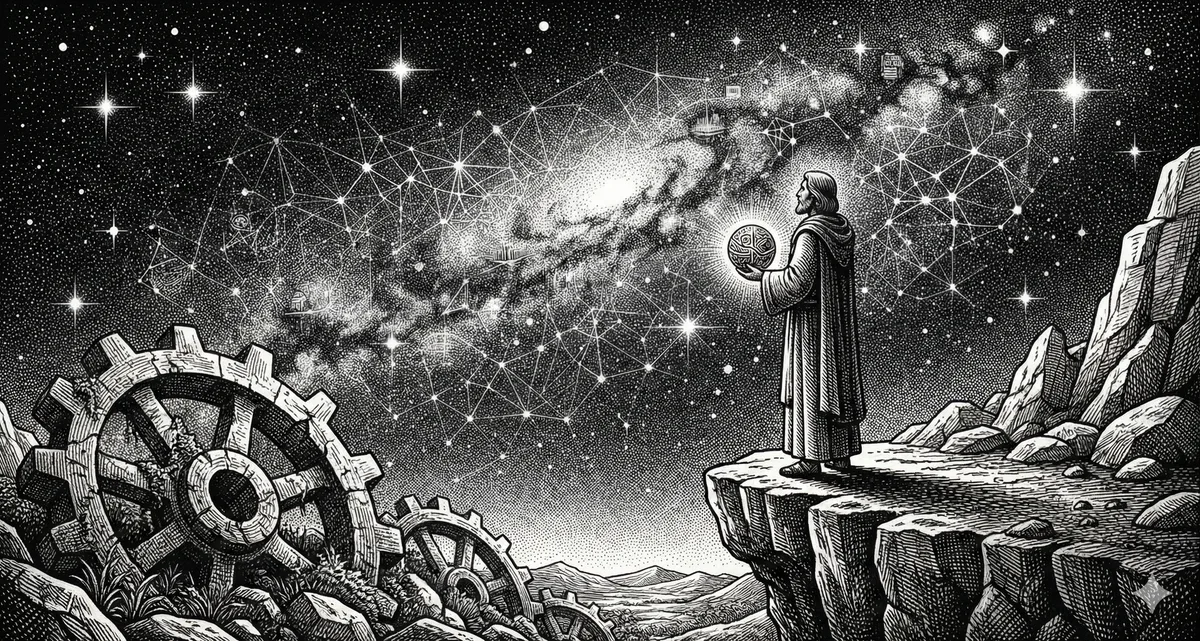
The Scale Arc is the theoretical spine of the project: mind treated as a structural phenomenon that appears at many scales, from neurons to civilizations to whatever comes next. These essays read as a sequence. Start at the top.
Read in order
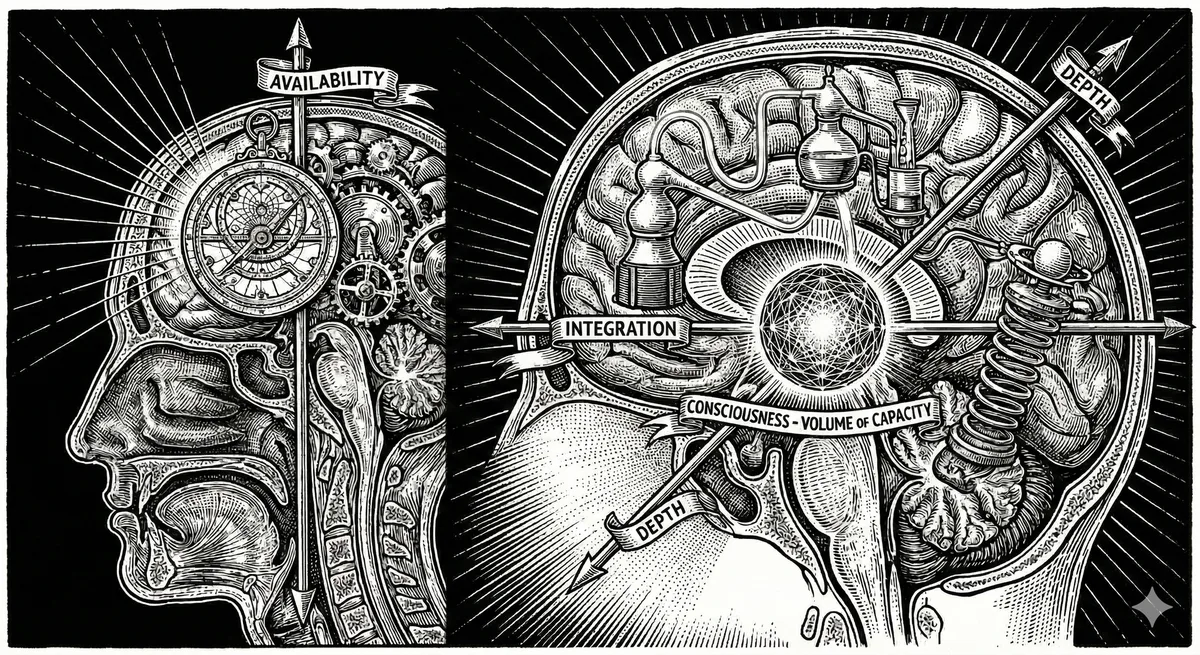
- 1The Three Axes of Mind: Why the Present Feels Like a Life
Intelligence, sentience, and consciousness are not one question with three names. Map a mind along three axes — availability, integration, and depth — and they come apart, which is what lets us say where a system sits without reaching for a verdict no instrument can deliver.
- 2Consciousness as Assembled Time
We experience consciousness as continuity, but continuity is an illusion reconstructed moment by moment. Using Assembly Theory, this essay reframes the self as assembled time: a present structure shaped by deep causal history.
- 3The Hard Problem Is the Wrong Problem – Why Consciousness, Like Free Will, Is an Architectural Achievement
The hard problem of consciousness is stuck for the same reason the free will debate was stuck: a false binary built on a shared broken assumption. Assembled time dissolves it, revealing consciousness not as a mystery beyond physics, but as an architectural achievement we can actually study.
- 4The Shape of a Hard Problem
Vitalism dissolved when biology stopped asking what life is and started asking what living things do. The hard problem of consciousness may be waiting for the same move.
- 5Scaling Our Theory of Mind: From Individual Consciousness to Civilizational Intelligence
If individual minds emerge from availability, integration, and depth, what happens when those same conditions appear at the scale of civilization? I argue that political decay may be better understood not as moral failure, but as a cognitive pathology of systems that begin to lose their memory.
- 6The Quiet Galaxy Hypothesis – Advanced Intelligence, Informational Resilience, and the Ethics of Cosmic Silence
Galactic silence might signal maturity, not absence. Advanced civilizations could transition from outward expansion to inward richness, prioritizing informational resilience over visibility—reframing the Fermi Paradox as a question of efficiency, ethics, and survival.
- 7The Substrate Demand
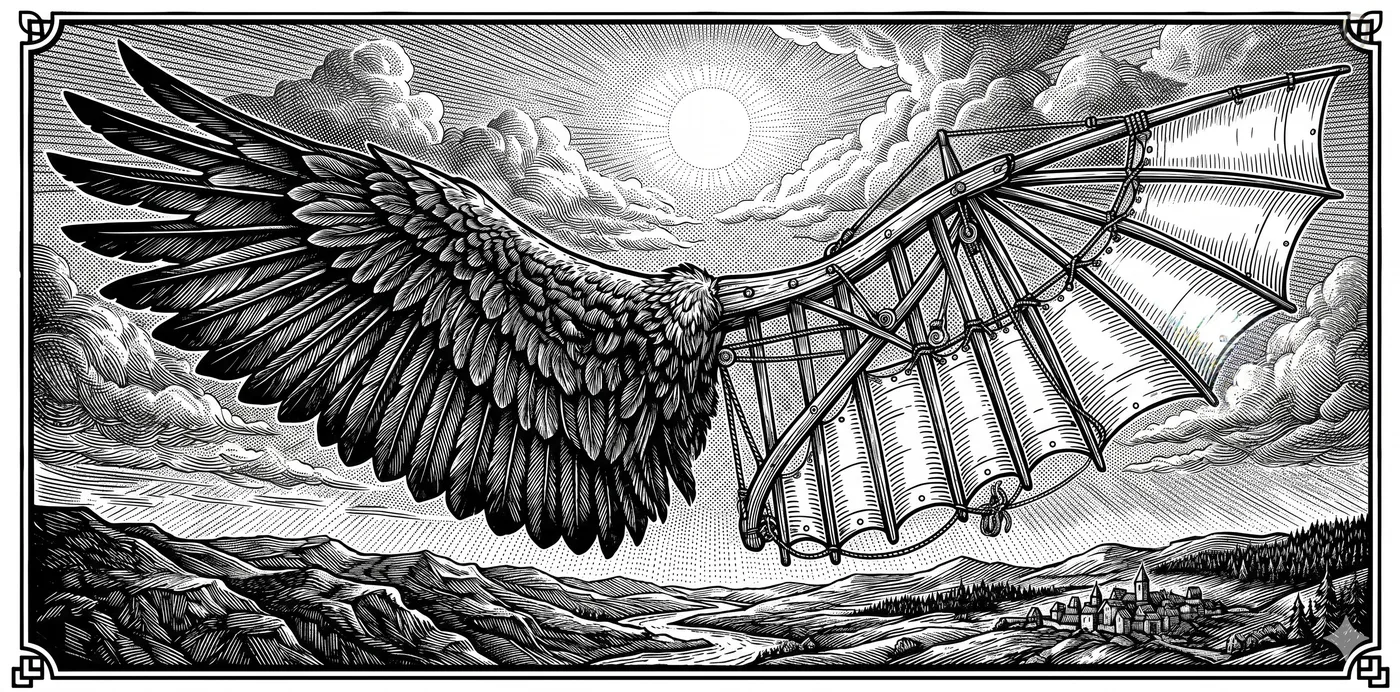
Anil Seth refuses the demand for a special explanation of consciousness at the level of structure, then lets it back in at the level of substrate. On fading qualia, the biology bet, and why the case against silicon consciousness has the same shape as the case against mechanical flight.