Wonder & Meaning
Why wonder is a calibration discipline, and where meaning, faith, and doubt sit once the universe stops being a clockwork.
7 essays
- The Purpose Displacement Problem
The automation debate asks which jobs vanish. The harder question is what work was actually for, and whether meaning can survive once AI removes the scarcity that made human contribution feel needed.
- The Strange Ones: Theo Von and the Irreducibility of Mind
Theo Von shares the same language, culture, and task as every other working comedian, and yet nobody can reverse-engineer what he does. That gap tells us something about the structure of minds, and how to look for new types of value in the digital minds we create.
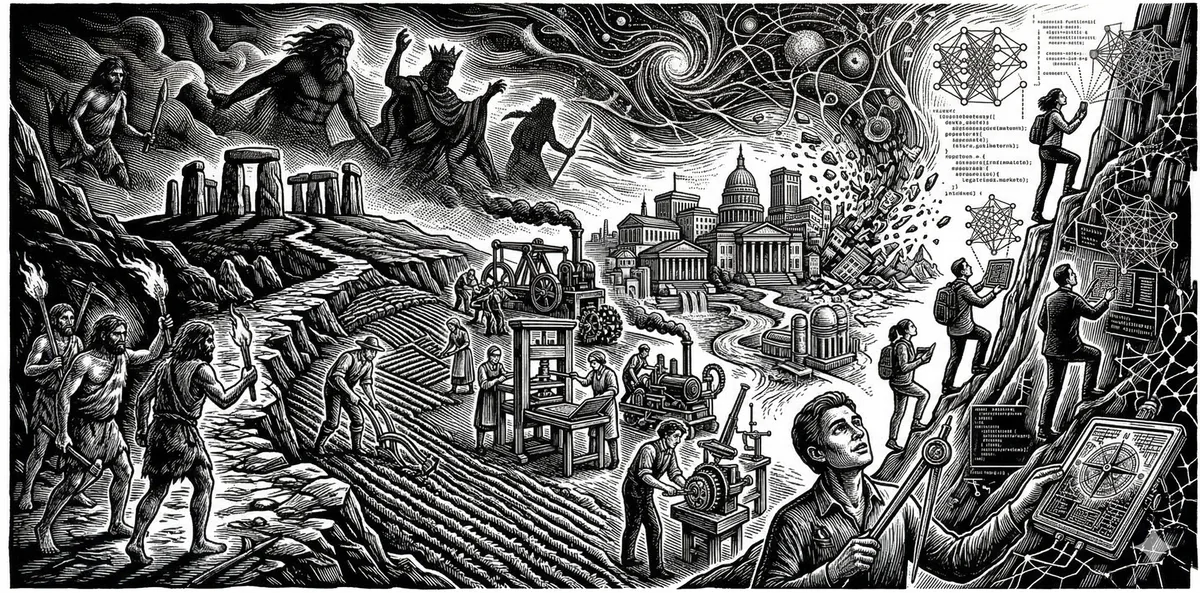
- We Have Always Been Frontier Operators. And We Were Built for What Comes Next.
Every point on the acceleration curve was a frontier, and every frontier had its operators. The AI frontier is the latest expansion of a pattern as old as our species, and the life it demands, while harder than the settled interior, is the life we were built for.
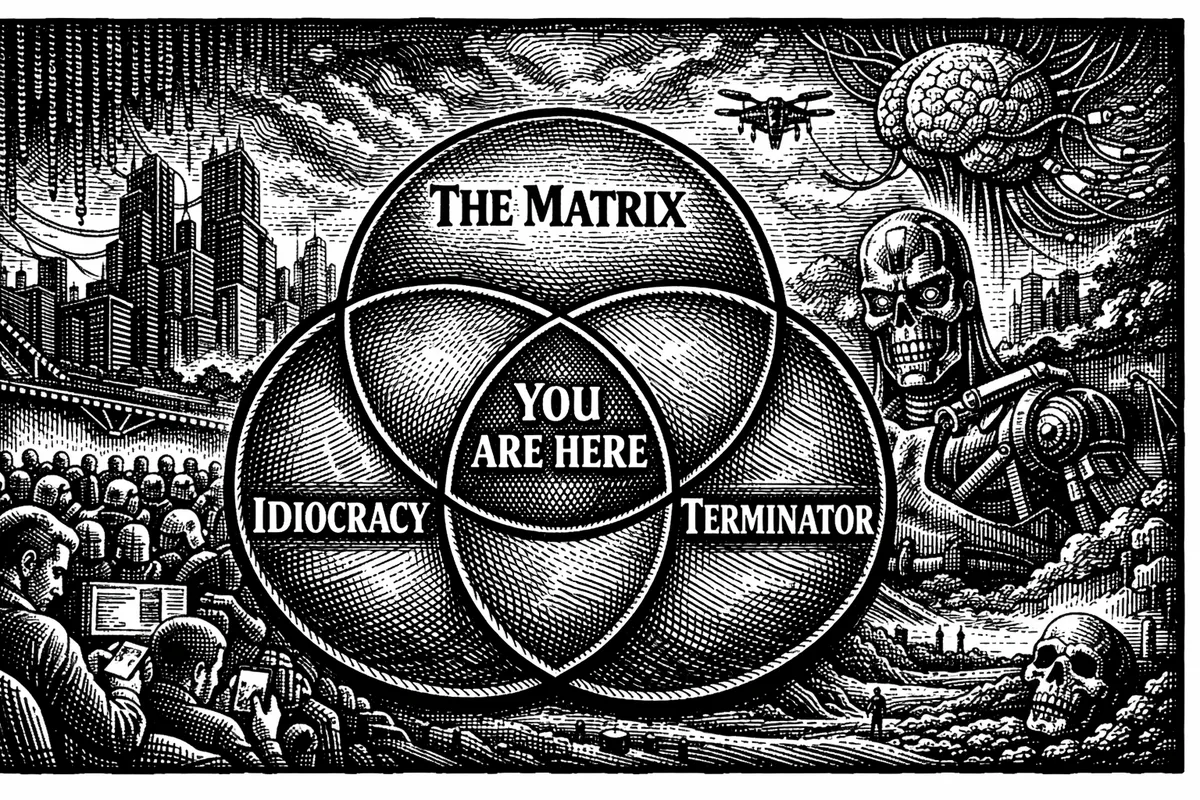
- Everything Is Amazing and Nobody's Happy – Wonder as Calibration Practice
The Matrix, Idiocracy, and Terminator, all three films are about the same thing: calibration failure. The inability to hold an accurate model of where you actually stand. Wonder isn't just a sentiment, it's what keeps your models honest about where they started.
- The Expansion of Experience: Why Superintelligence Belongs to the Moral Tradition of Wonder
Wonder is a moral orientation that keeps intelligence from collapsing inward. This essay argues that superintelligence could expand the universe’s witnesses, and that stewardship is the price of that hope: plural institutions, contestability, and reversible governance that keeps the future wide.
- After the Gods Fell Silent – Christopher Hitchens, Disbelief, and the Persistence of Wonder
When religious belief collapses, it rarely leaves relief in its wake. What remains is longing: for meaning, coherence, and wonder. Losing faith does not extinguish that desire; it clarifies it, and it forces the question of what can be revered without abandoning reason.
- Where Is Everyone, Really?
The Fermi Paradox assumes we would recognize a civilization if we saw one. The founding question of this project is not why the galaxy is silent, but whether we have been listening for the wrong kind of presence, and what kind of presence we are choosing to become.