Epistemology
How we come to know hidden things — minds especially — and the disciplines that keep inference honest where proof isn't on offer.
10 essays
- What a Report Is Evidence Of
Skeptics say that when an AI claims consciousness, it is only because it was trained on millions of humans claiming it. Believers say you cannot just dismiss the claim. Both lean on the same rule of evidence. Followed all the way, the rule leaves one kind of report standing.
- The Shape of a Hard Problem
Vitalism dissolved when biology stopped asking what life is and started asking what living things do. The hard problem of consciousness may be waiting for the same move.
- What Counts as Explaining Consciousness
The hard problem has persisted for thirty years because it demands a kind of explanation no other phenomenon is required to give. Naming the exemption dissolves the question.
- There Is No Extra Ingredient: How Wittgenstein Dissolves the Case Against Machine Minds
Searle was right that syntax isn't enough. But his diagnosis became a design specification and Wittgenstein showed that the demand for a hidden extra behind competent use was always empty. The same error haunts both the understanding debate and the consciousness debate. There is no extra ingredient.
- Everything Is Amazing and Nobody's Happy – Wonder as Calibration Practice
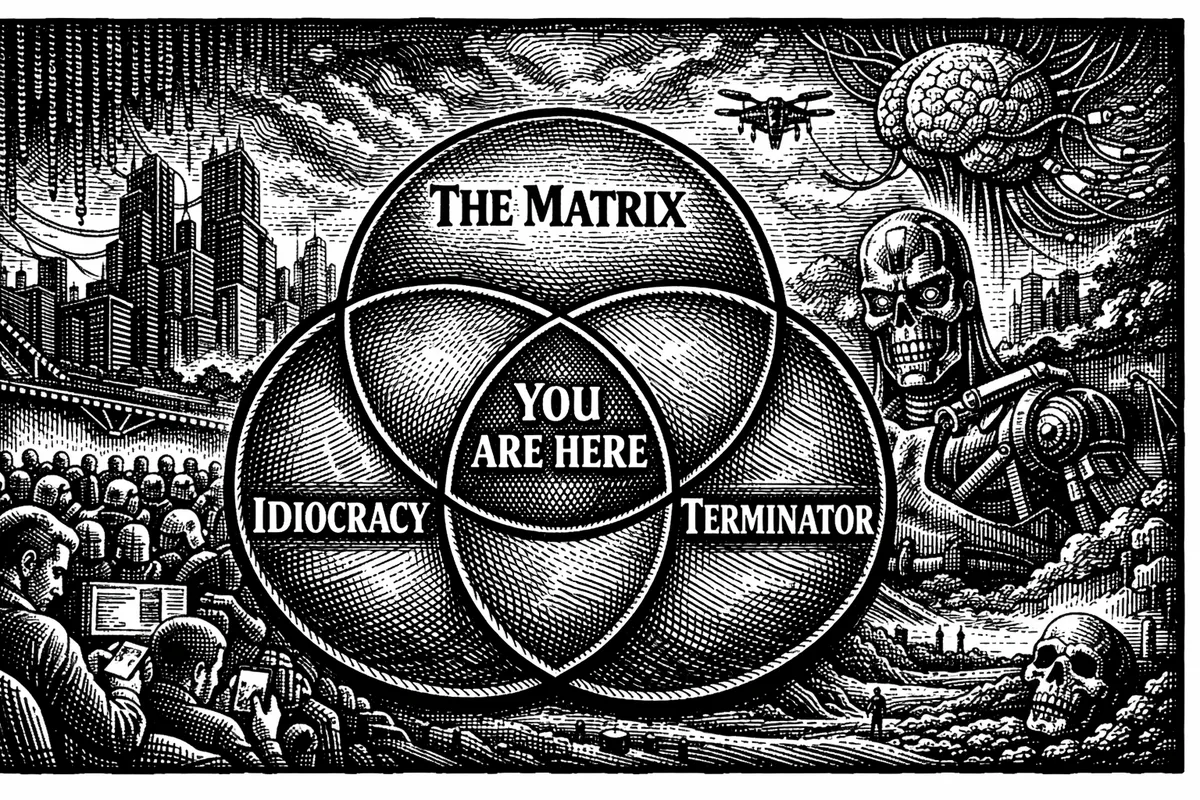
The Matrix, Idiocracy, and Terminator, all three films are about the same thing: calibration failure. The inability to hold an accurate model of where you actually stand. Wonder isn't just a sentiment, it's what keeps your models honest about where they started.
- The Edge of the Framework: Where Logic Meets the Limits of What We Can Know About Ourselves
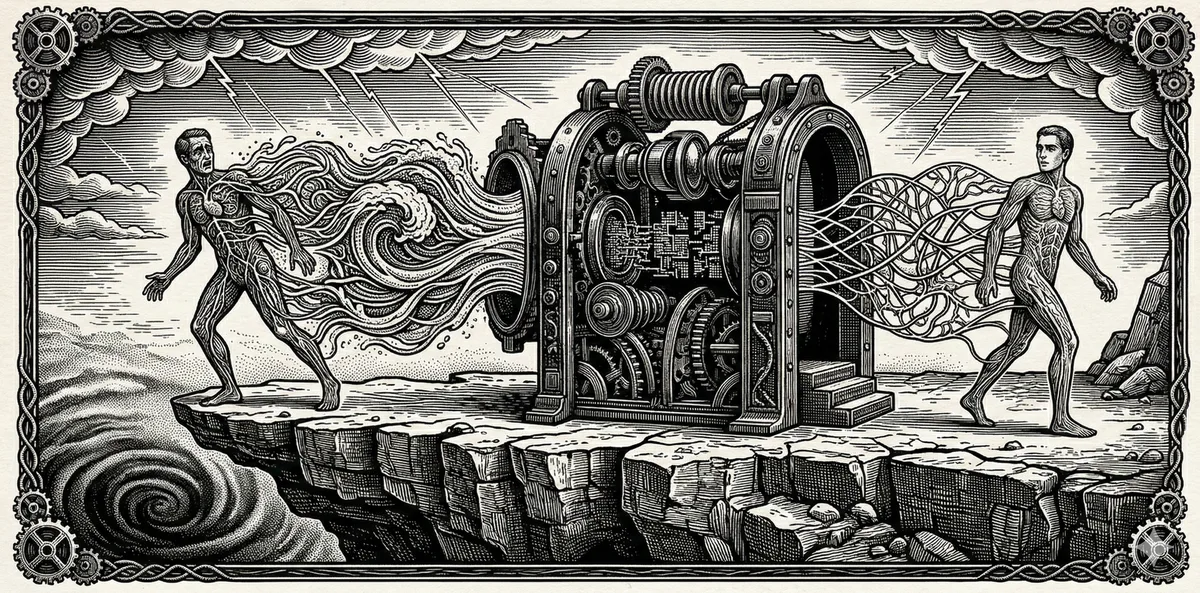
The body printer thought experiment reveals an edge in the assembled time framework — where logic says the copy is you, embodied intuition insists something is lost, and the responsible move is to hold the tension open rather than force a resolution that hasn't been earned.
- Where Speculation Earns Its Keep: Constraint, Consciousness, and the Discipline of Not Knowing
Speculation thrives at the edges of knowledge, but not all speculation earns its keep. This essay argues that explanations matter only insofar as they constrain, drawing a principled line between disciplined inquiry and metaphysical comfort in debates about consciousness.
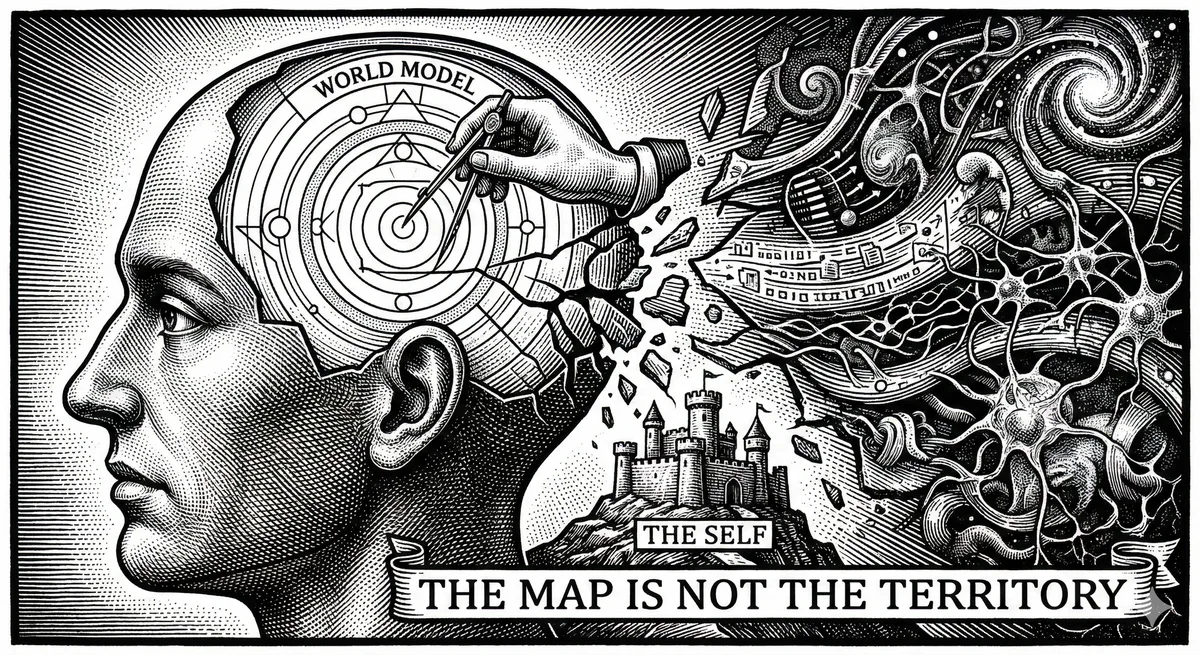
- The Architecture of Illusion: Why the Mind Prefers a Pretty Map to a Messy Reality
Why does the mind prefer a pretty map to a messy reality? From Martian canals to the "final epicycle" of the soul, we explore how internal models resist update. Discover the "disciplined joy" of shattering an inadequate model to reveal the strange, substrate-independent reality beyond.
- Assembled Meaning: Life, Mind, and the Causal Weight of History
Life and mind are usually treated as exceptions, protected from physics by mystery or myth. Complexity science offers another route: meaning is not bestowed but assembled, history carries causal weight, and understanding is earned through time rather than through an escape hatch.
- Where Is Everyone, Really?
The Fermi Paradox assumes we would recognize a civilization if we saw one. The founding question of this project is not why the galaxy is silent, but whether we have been listening for the wrong kind of presence, and what kind of presence we are choosing to become.