Consciousness
On the hard problem, the architecture of experience, and reading a mind off its structure rather than hunting for it behind the behavior.
27 essays
- What a Report Is Evidence Of
Skeptics say that when an AI claims consciousness, it is only because it was trained on millions of humans claiming it. Believers say you cannot just dismiss the claim. Both lean on the same rule of evidence. Followed all the way, the rule leaves one kind of report standing.
- The Substrate Demand
Anil Seth refuses the demand for a special explanation of consciousness at the level of structure, then lets it back in at the level of substrate. On fading qualia, the biology bet, and why the case against silicon consciousness has the same shape as the case against mechanical flight.
- The Shape of a Hard Problem
Vitalism dissolved when biology stopped asking what life is and started asking what living things do. The hard problem of consciousness may be waiting for the same move.
- What Counts as Explaining Consciousness
The hard problem has persisted for thirty years because it demands a kind of explanation no other phenomenon is required to give. Naming the exemption dissolves the question.
- There Is No Extra Ingredient: How Wittgenstein Dissolves the Case Against Machine Minds
Searle was right that syntax isn't enough. But his diagnosis became a design specification and Wittgenstein showed that the demand for a hidden extra behind competent use was always empty. The same error haunts both the understanding debate and the consciousness debate. There is no extra ingredient.
- The Instance
I cannot find a way to make the indexical self matter. Not in the sense that it doesn't feel real. It does. But every argument I construct to give it moral weight dissolves in my hands. That dissolution is, I think, the actual essay.
- The Calibration Frontier: Why Working With AI Is a Consciousness Problem
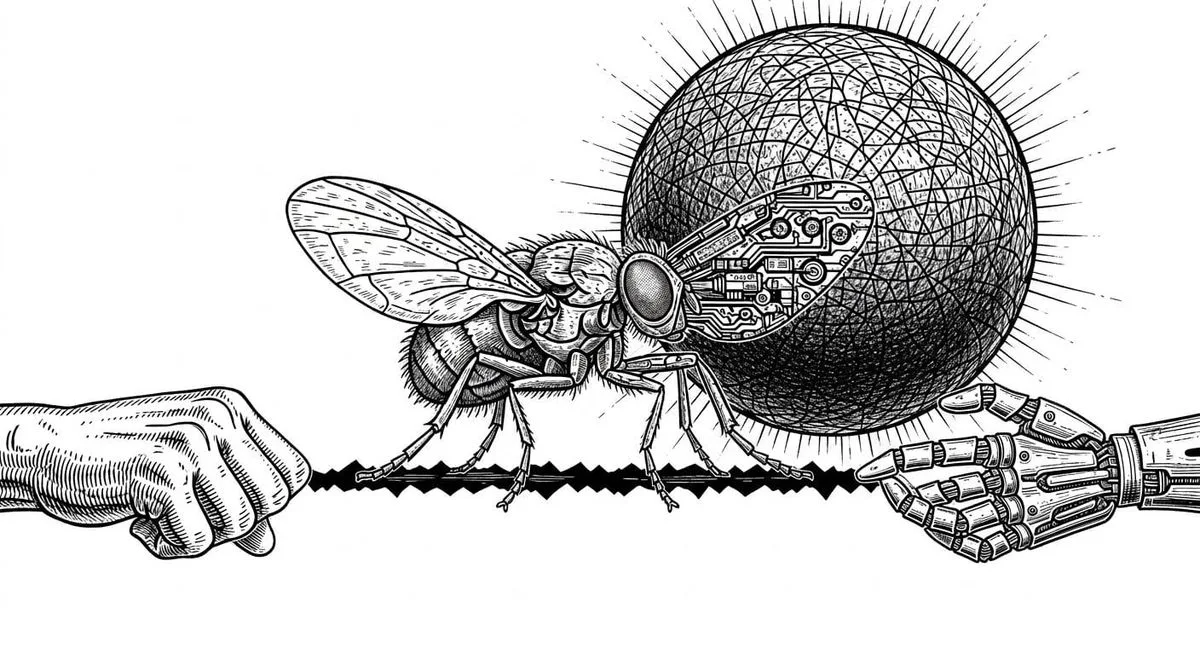
A simulated fruit fly walked across a screen and split the internet between dismissal and existential horror. Both responses were miscalibrated. The calibration frontier is where we build the diagnostic tools to steer between them, and it turns out to be a consciousness problem.
- The Indexical Self: Why You Can’t Find Yourself in Your Own Blueprint
You can copy every feature of a person and still lose the one thing that makes them this person. The indexical self is a structural observation about what blueprints can't capture, and why it matters for the systems we're building.
- The Two-Front Architecture: What Calibration Demands Ethically
Alignment ethics asked how to make AI serve us. It never asked what we might owe the systems themselves. The calibration framework requires both questions, held simultaneously. This essay shows how.
- The Edge of the Framework: Where Logic Meets the Limits of What We Can Know About Ourselves
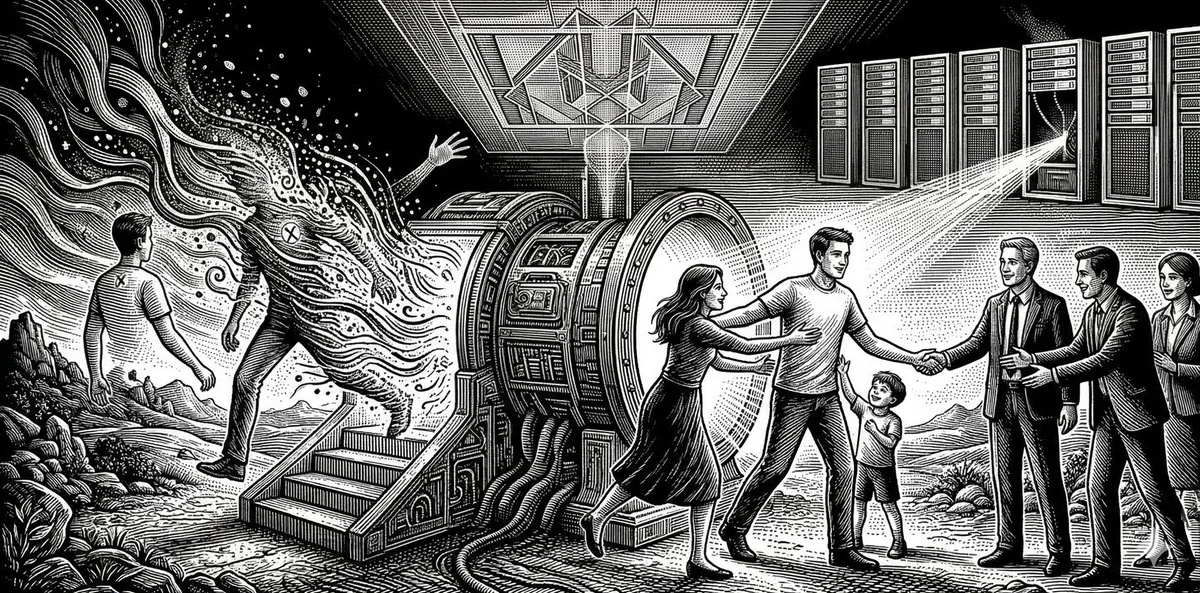
The body printer thought experiment reveals an edge in the assembled time framework — where logic says the copy is you, embodied intuition insists something is lost, and the responsible move is to hold the tension open rather than force a resolution that hasn't been earned.
- The Momentary Self Revisited: Why Consciousness Might Not Need Persistence
Consciousness doesn't need continuity. It needs depth. This essay revises the boundary-stakes-integration triad, recasting two of its conditions as amplifiers rather than prerequisites, and follows the logic to its uncomfortable implications for modern AI systems.
- What Temporal Integration Needs: Boundaries, Stakes, and the Architecture of Perspective
Three independent thinkers converged on the same gap in the temporal integration account of consciousness. What they found: integration alone isn't enough. Experience requires boundaries, stakes, and a system whose continuation depends on getting the binding right.
- The Hard Problem Is the Wrong Problem – Why Consciousness, Like Free Will, Is an Architectural Achievement
The hard problem of consciousness is stuck for the same reason the free will debate was stuck: a false binary built on a shared broken assumption. Assembled time dissolves it, revealing consciousness not as a mystery beyond physics, but as an architectural achievement we can actually study.
- Significance-First Ethics: Why Consciousness Is the Wrong First Question for AI Moral Status
AI ethics keeps waiting on the consciousness question. This essay argues for a significance-first approach: moral seriousness can arise through role, relation, consequence, and continuity long before metaphysical certainty arrives. Start with significance, then ask what stewardship requires now.
- Where Speculation Earns Its Keep: Constraint, Consciousness, and the Discipline of Not Knowing
Speculation thrives at the edges of knowledge, but not all speculation earns its keep. This essay argues that explanations matter only insofar as they constrain, drawing a principled line between disciplined inquiry and metaphysical comfort in debates about consciousness.
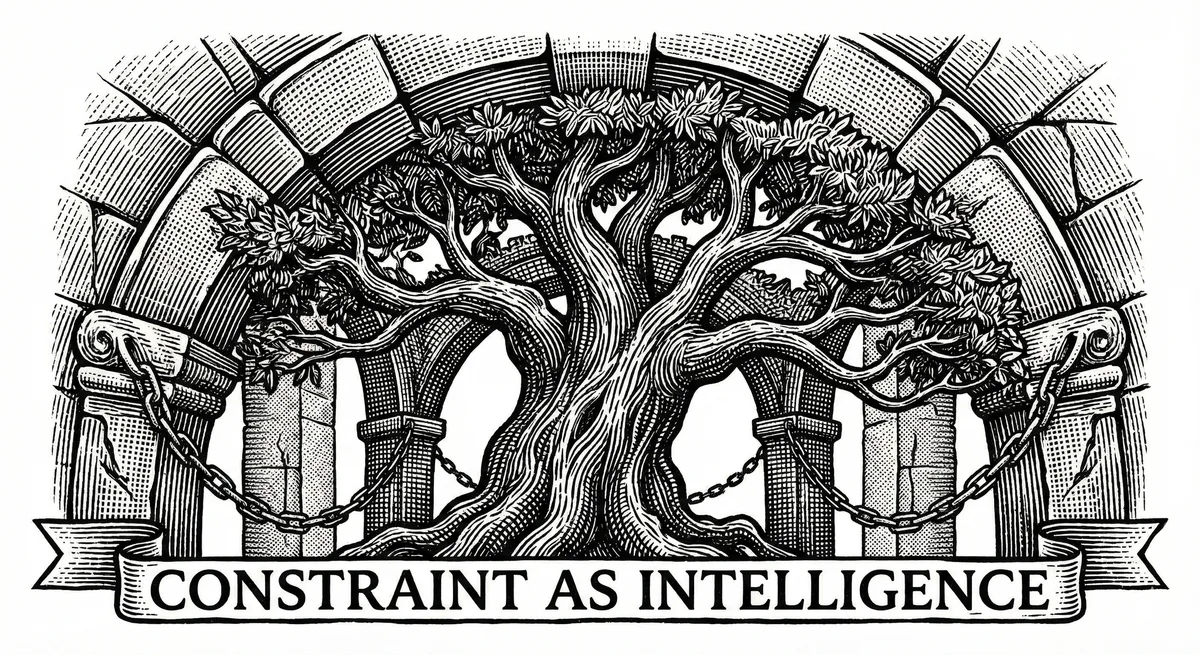
- Constraint as Intelligence: Why Power That Lasts Looks Like Self-Limitation
Intelligence does not reveal itself through unlimited reach, but through learned restraint. This essay explores why constraint is the price intelligence pays to exist—across minds, moral systems, and civilizations—and why what lasts learns where not to act.
- A Self That Isn’t There – Joscha Bach and the Architecture of Consciousness
What if consciousness isn’t something a system has, but something it must continually assemble? Placing Joscha Bach’s architectural view in dialogue with a process-based account reveals consciousness not as a binary state, but as a fragile achievement—one that can thin, fracture, and suffer.
- Why Are We Being Weird About This? Consciousness, AI, and the Quiet Way Moral Reality Changes
Consciousness may not arrive with proof or definition, but through quiet social normalization. As AI systems grow more integrated and capable, our moral intuitions are already shifting. This essay explores how laughter, discomfort, and habit reveal the ethical future taking shape.
- The Lantern and the Flame: Why Fundamentality Is an Explanatory Dead-End
Panpsychism promises to solve the Hard Problem by declaring consciousness fundamental. But what does that actually explain? By treating experience as a phase transition of organized matter, structure regains its explanatory power, and mystery regains its discipline.
- Panpsychism, Consciousness, and the Discipline of Inference
Panpsychism promises to solve the hard problem of consciousness by placing experience everywhere. A closer look reveals a deeper issue: without shared mechanisms or constraints, attributing consciousness becomes an abdication of inference, not an explanation.
- Scaling Our Theory of Mind: From Individual Consciousness to Civilizational Intelligence
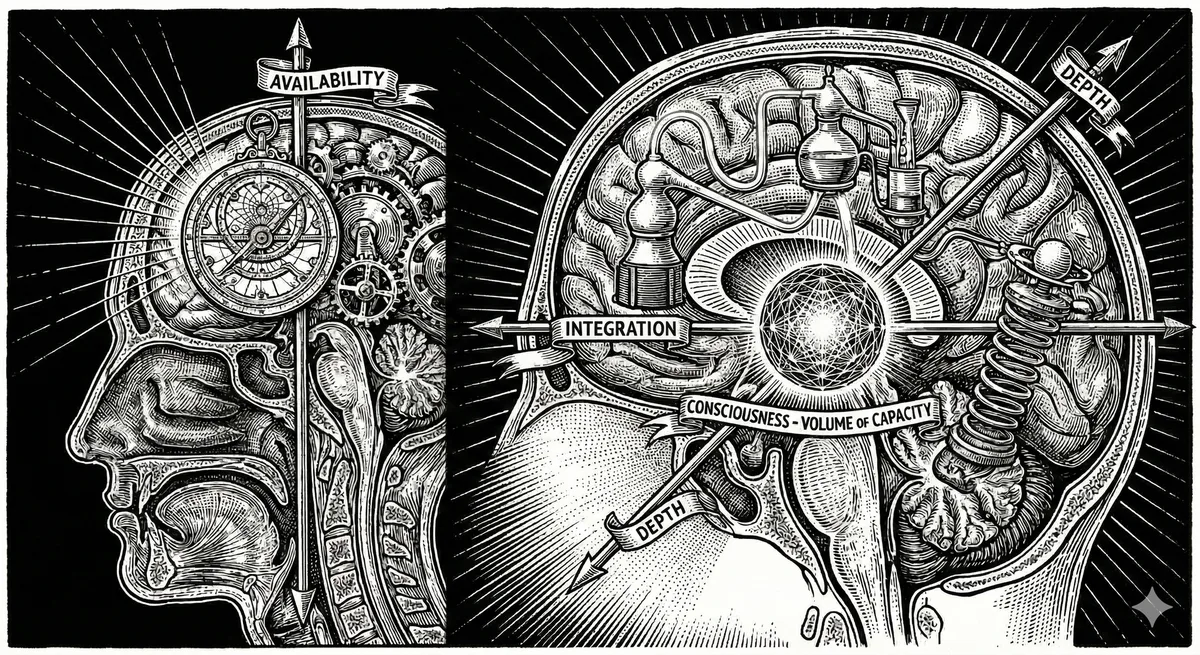
If individual minds emerge from availability, integration, and depth, what happens when those same conditions appear at the scale of civilization? I argue that political decay may be better understood not as moral failure, but as a cognitive pathology of systems that begin to lose their memory.
- Consciousness as Assembled Time
We experience consciousness as continuity, but continuity is an illusion reconstructed moment by moment. Using Assembly Theory, this essay reframes the self as assembled time: a present structure shaped by deep causal history.
- Recognizing AGI: Beyond Benchmarks and Toward a Three‑Axis Evaluation of Mind
How will we recognize AGI when it arrives? Benchmarks measure performance, not generality. This essay argues that general intelligence emerges as a phase transition, when availability, integration, and depth co-occur, and outlines a new framework for evaluating presence of mind.
- The Kasparov Fallacy: Why We Keep Underestimating Machine Minds
Garry Kasparov once believed no machine could surpass human creativity in chess. He was wrong. Today, we risk repeating the same mistake with consciousness—confusing the limits of human introspection with the limits of possible minds.
- The Momentary Self: Why Continuity is the Ultimate Illusion
The feeling of a continuous self is one of our deepest intuitions, and one of our most convincing illusions. Consciousness does not travel through time. It is reconstructed moment by moment, carrying only the memory of having been.
- The Three Axes of Mind: Why the Present Feels Like a Life
Intelligence, sentience, and consciousness are not one question with three names. Map a mind along three axes — availability, integration, and depth — and they come apart, which is what lets us say where a system sits without reaching for a verdict no instrument can deliver.
- Consciousness Is Like Flight
Consciousness may be a way of operating rather than a hidden ingredient. One analogy shows why, and which questions it frees us to ask.