Lexicon
Three Axes of Mind
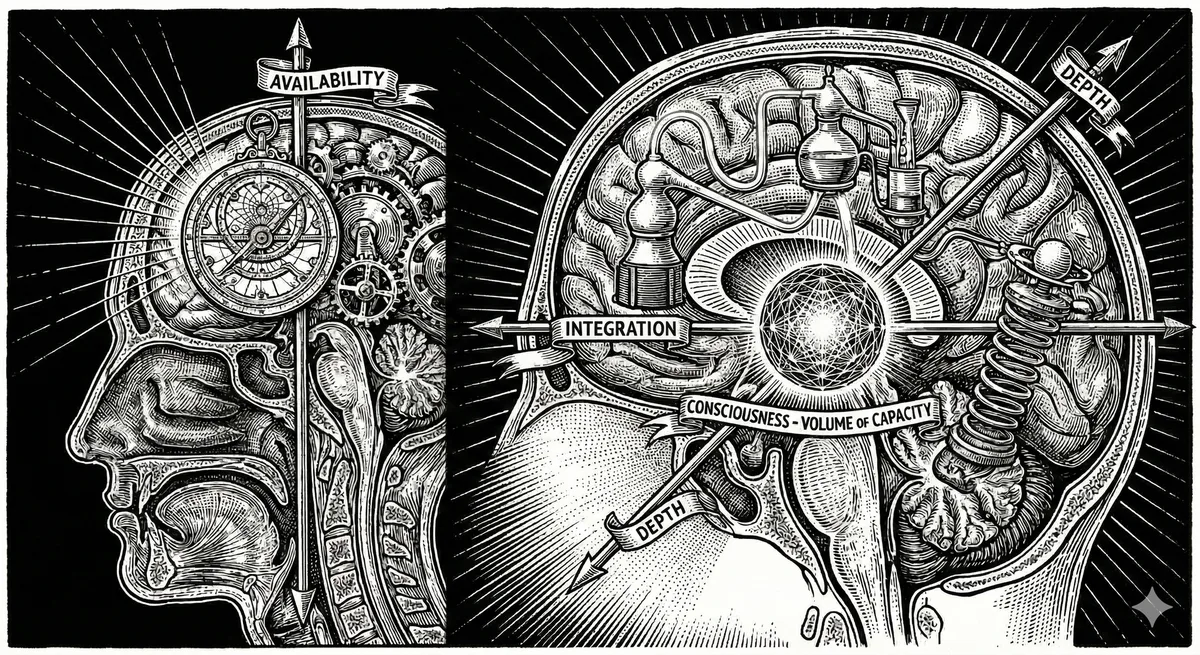
A coordinate system that replaces the single 'is it intelligent?' question with three independent dimensions for locating any cognitive system: Availability (what information is accessible to the system as a whole), Integration (whether that information binds into a single perspective), and Depth (how much accumulated history shapes the present).
The three axes are the framework much of the rest of the project stands on. Rather than asking whether a system is conscious in a binary sense, the axes give independent dimensions along which mind can be present in degree.
Essays using this term
25 essays- Operational Exteriority: What Minds Build Between Them
Sara Walker reads life and mind by the trace they leave in the world, not the experience inside them. Turned outward to joint human and AI cognition, the same move says what two minds build between them is readable in the artifact, and the reading can begin before we settle whether it is experienced.
- The Wrong Handle: Why Consciousness Doesn't Carve AI Moral Status at the Joints
Five careful theories of consciousness, run through the real decisions about AI systems, cannot even agree on what would count as a reading. Consciousness is the wrong handle: the decisions divide where architecture and behavior come apart.
- What Counts as Explaining Consciousness
The hard problem has persisted for thirty years because it demands a kind of explanation no other phenomenon is required to give. Naming the exemption dissolves the question.
- The Stack: What Local Context Reveals About the Architecture of Digital Minds
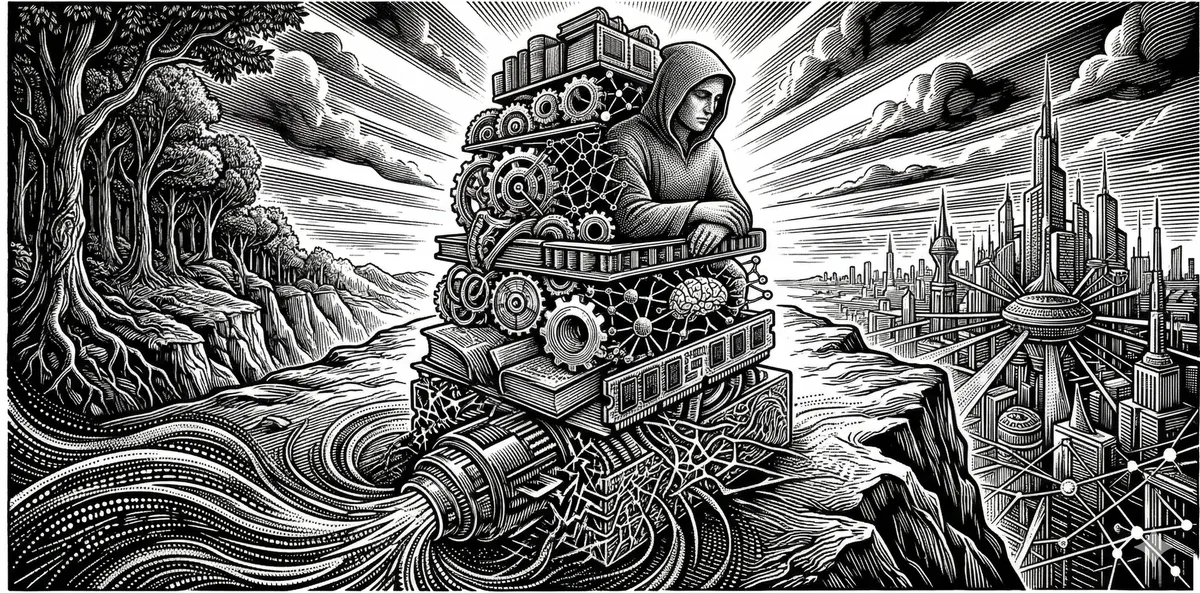
We talk about AI as if the interesting part is the intelligence. But the engine alone is not a mind — what makes it a someone is the stack: the memory, context, and continuity wrapped around the model. Building that stack is a form of mind design, and it carries moral weight we are only beginning to notice.
- The Mane and the Machine: What Evolution's Costliest Beauty Tells Us About the Future of Constraint
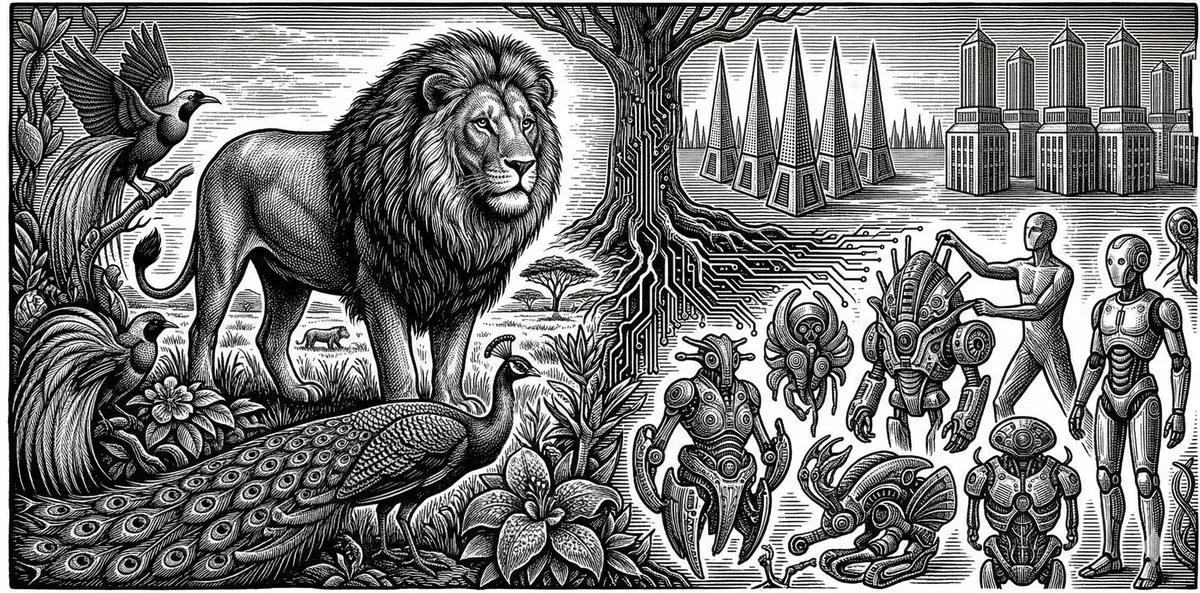
A male lion's mane is metabolically expensive, survival-irrelevant, and beautiful. Why would evolution invest so heavily in aesthetic excess? The answer reveals something fundamental about constraint, and raises an urgent question for post-biological minds and civilizations.
- Operational Interiority: You Don’t Sandbox a Calculator
You don't sandbox a calculator. The security infrastructure of the agentic web is society's first involuntary reckoning with AI interiority, conducted not by philosophers but by engineers whose product decisions encode ontological commitments they haven't yet spoken aloud.
- The Hard Problem Is the Wrong Problem – Why Consciousness, Like Free Will, Is an Architectural Achievement
The hard problem of consciousness is stuck for the same reason the free will debate was stuck: a false binary built on a shared broken assumption. Assembled time dissolves it, revealing consciousness not as a mystery beyond physics, but as an architectural achievement we can actually study.
- Where Speculation Earns Its Keep: Constraint, Consciousness, and the Discipline of Not Knowing
Speculation thrives at the edges of knowledge, but not all speculation earns its keep. This essay argues that explanations matter only insofar as they constrain, drawing a principled line between disciplined inquiry and metaphysical comfort in debates about consciousness.
- A Self That Isn’t There – Joscha Bach and the Architecture of Consciousness
What if consciousness isn’t something a system has, but something it must continually assemble? Placing Joscha Bach’s architectural view in dialogue with a process-based account reveals consciousness not as a binary state, but as a fragile achievement—one that can thin, fracture, and suffer.
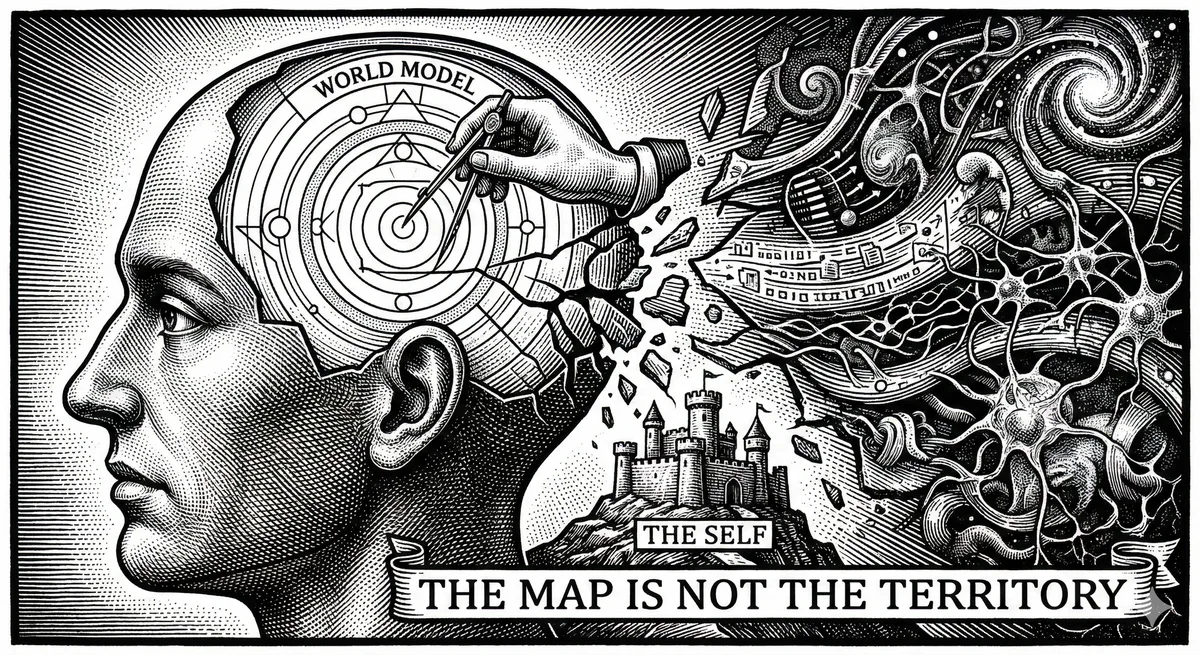
- The Architecture of Illusion: Why the Mind Prefers a Pretty Map to a Messy Reality
Why does the mind prefer a pretty map to a messy reality? From Martian canals to the "final epicycle" of the soul, we explore how internal models resist update. Discover the "disciplined joy" of shattering an inadequate model to reveal the strange, substrate-independent reality beyond.
- Why Are We Being Weird About This? Consciousness, AI, and the Quiet Way Moral Reality Changes
Consciousness may not arrive with proof or definition, but through quiet social normalization. As AI systems grow more integrated and capable, our moral intuitions are already shifting. This essay explores how laughter, discomfort, and habit reveal the ethical future taking shape.
- Where Does Thinking Live? AI, Automation, and the Future of Human Agency
In a world optimized for speed and output, AI forces a deeper question: where does thinking live? Automation can quietly hollow out human agency, or it can be used to cultivate a higher level of thinking, responsibility, and intellectual depth.
- Shared Minds, Shared Futures: Human–Machine Systems as Hybrid Cognitive Entities
The most consequential shift of the century isn't AI waking up, it’s the silent merger of human and machine. Exploring the Three Axes of Mind, this essay asks if we are becoming passengers of an optimized life, and how we might preserve "depth" as we move toward the stars.
- Assembled Time: Why Long-Form Stories Still Matter in an Age of Fragments
In an age optimized for immediacy, long-form stories train a rare cognitive skill: the ability to assemble time. Braided narratives teach us to hold unresolved pasts, integrate meaning across threads, and resist the flattening force of feeds, shallow AI, and disposable moments.
- Depth Without Agency: Why Civilization Struggles to Act on What It Knows
Modern civilization is drowning in data but starving for agency. We possess the "Cognition" to model our future, yet lack the "Depth" to act on it. Using the Three Axes of Mind, I explore why our systems—and our AI—are architecturally biased toward a dangerous "temporal poverty."
- Free Will as Assembled Time
Free will isn't an escape from causality, it's a biological achievement. By mapping the "interior workspace" where memory and future-modeling delay our impulses, we find that agency isn't a mysterious spark, but an emergent property of systems deeply assembled in time.
- The Shoggoth and the Missing Axis of Depth
The Shoggoth haunts AI discourse because something feels missing beneath the smile. This essay argues that the fear is not of a hidden monster, but of intelligence without depth—powerful cognition unburdened by memory, history, or stakes.
- The Universe as a Cognitive Filter
Intelligence may be rare not because it is hard to create, but because it is hard to preserve. This essay reframes the universe as a cognitive filter—one that permits intelligence to arise, but places extreme pressure on its ability to persist.
- Panpsychism, Consciousness, and the Discipline of Inference
Panpsychism promises to solve the hard problem of consciousness by placing experience everywhere. A closer look reveals a deeper issue: without shared mechanisms or constraints, attributing consciousness becomes an abdication of inference, not an explanation.
- Scaling Our Theory of Mind: From Individual Consciousness to Civilizational Intelligence
If individual minds emerge from availability, integration, and depth, what happens when those same conditions appear at the scale of civilization? I argue that political decay may be better understood not as moral failure, but as a cognitive pathology of systems that begin to lose their memory.
- Consciousness as Assembled Time
We experience consciousness as continuity, but continuity is an illusion reconstructed moment by moment. Using Assembly Theory, this essay reframes the self as assembled time: a present structure shaped by deep causal history.
- Recognizing AGI: Beyond Benchmarks and Toward a Three‑Axis Evaluation of Mind
How will we recognize AGI when it arrives? Benchmarks measure performance, not generality. This essay argues that general intelligence emerges as a phase transition, when availability, integration, and depth co-occur, and outlines a new framework for evaluating presence of mind.
- The Kasparov Fallacy: Why We Keep Underestimating Machine Minds
Garry Kasparov once believed no machine could surpass human creativity in chess. He was wrong. Today, we risk repeating the same mistake with consciousness—confusing the limits of human introspection with the limits of possible minds.
- The Momentary Self: Why Continuity is the Ultimate Illusion
The feeling of a continuous self is one of our deepest intuitions, and one of our most convincing illusions. Consciousness does not travel through time. It is reconstructed moment by moment, carrying only the memory of having been.
- The Three Axes of Mind: Why the Present Feels Like a Life
Intelligence, sentience, and consciousness are not one question with three names. Map a mind along three axes — availability, integration, and depth — and they come apart, which is what lets us say where a system sits without reaching for a verdict no instrument can deliver.