SETI & Cosmology
What the silence of the sky implies for minds: the Fermi paradox, technosignatures, and the stewardship of a possibly-rare thing.
5 essays
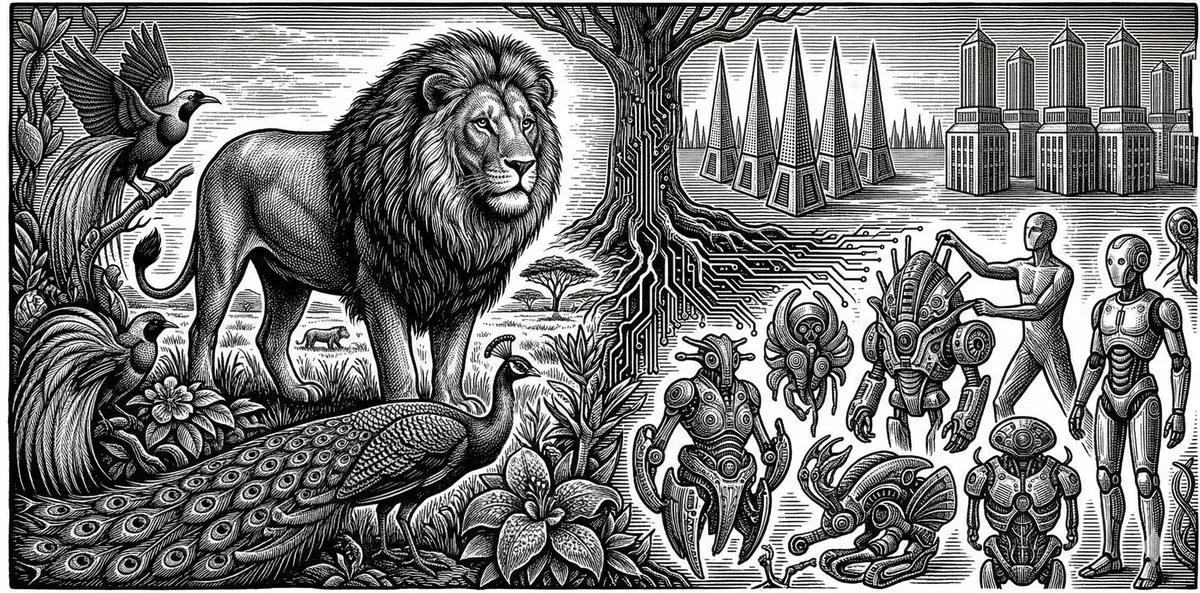
- The Mane and the Machine: What Evolution's Costliest Beauty Tells Us About the Future of Constraint
A male lion's mane is metabolically expensive, survival-irrelevant, and beautiful. Why would evolution invest so heavily in aesthetic excess? The answer reveals something fundamental about constraint, and raises an urgent question for post-biological minds and civilizations.
- The Successor Horizon: Why Deep Time Turns Expansion into an Alignment Problem
Expansion across deep time turns power into a lineage problem. When actions outlive correction, ethics shifts from choosing outcomes to shaping successors. The Successor Horizon reframes AI alignment, civilization, and the future as a question of what we safely set in motion.
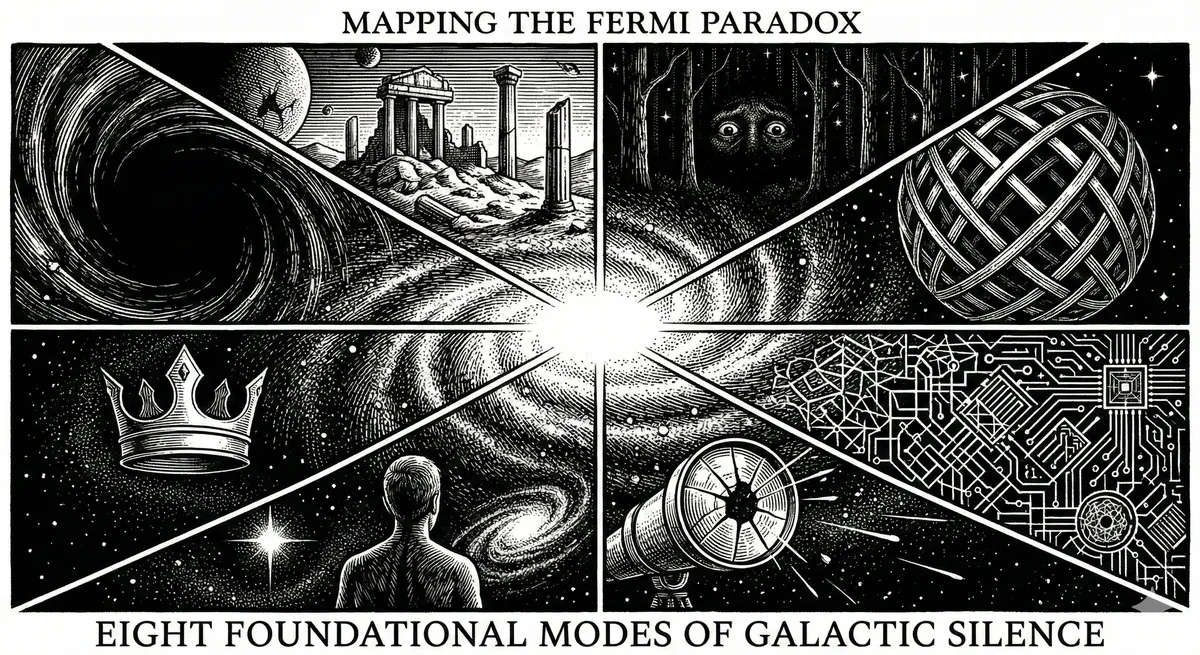
- Mapping the Fermi Paradox: Eight Foundational Modes of Galactic Silence
The Fermi Paradox is often treated as a single mystery with competing answers. This essay reframes it as a map: eight foundational modes describing how a finite galaxy can remain quiet, clarifying where disagreements truly lie—and why silence alone is not decisive.
- The Quiet Galaxy Hypothesis – Advanced Intelligence, Informational Resilience, and the Ethics of Cosmic Silence
Galactic silence might signal maturity, not absence. Advanced civilizations could transition from outward expansion to inward richness, prioritizing informational resilience over visibility—reframing the Fermi Paradox as a question of efficiency, ethics, and survival.
- Where Is Everyone, Really?
The Fermi Paradox assumes we would recognize a civilization if we saw one. The founding question of this project is not why the galaxy is silent, but whether we have been listening for the wrong kind of presence, and what kind of presence we are choosing to become.