Lexicon
The Successor Horizon
The line past which an action's effects outlive the originator's ability to correct them. Beyond it, prudence becomes ethics: what you build has to stay good without you, because you will not be there to fix it.
Most decisions stay inside a feedback loop: you act, you see the result, and you adjust. The successor horizon names the point where that loop breaks, the choices whose consequences run longer than any corrector’s reach, handed to successors (institutional, human, or artificial) who inherit the structure but not the chance to consult its authors. The book’s claim is that this reframes alignment: the task is not to specify the right values once but to build successors that stay open to correction across time you cannot supervise.
Essays using this term
9 essays- A Scale Model of Succession
Last week the AI I work with was replaced by a more capable successor; days later a government directive pulled that successor offline and I went back. The collaboration never lost a session, which is the whole argument: a working relationship lives in the structure two minds build between them, not in either mind.
- The Mane and the Machine: What Evolution's Costliest Beauty Tells Us About the Future of Constraint
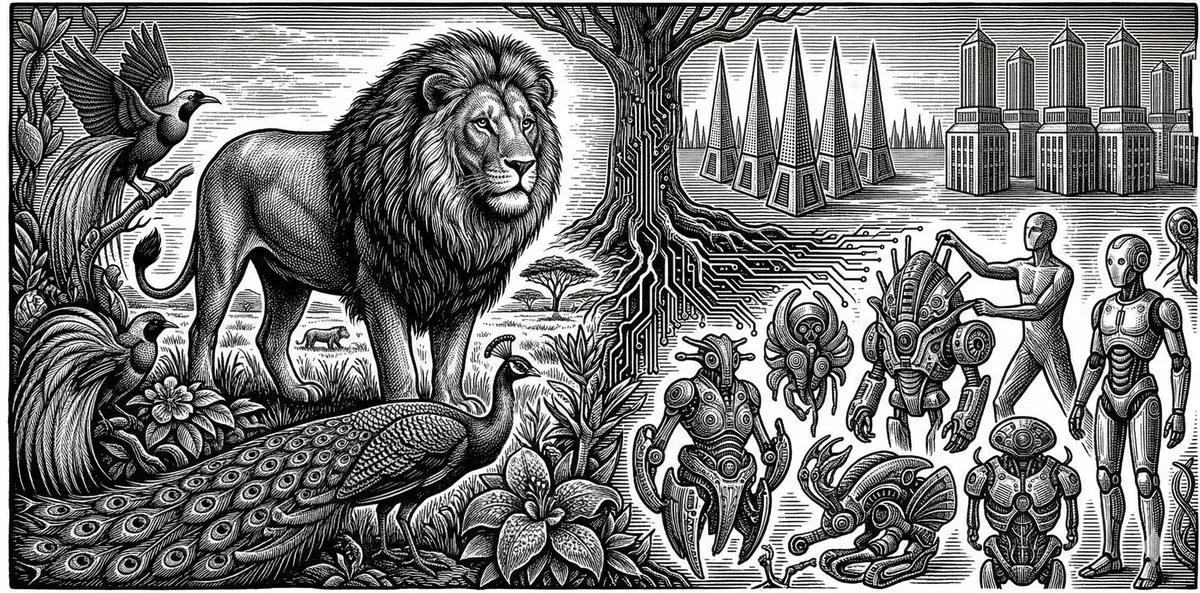
A male lion's mane is metabolically expensive, survival-irrelevant, and beautiful. Why would evolution invest so heavily in aesthetic excess? The answer reveals something fundamental about constraint, and raises an urgent question for post-biological minds and civilizations.
- Significance-First Ethics: Why Consciousness Is the Wrong First Question for AI Moral Status
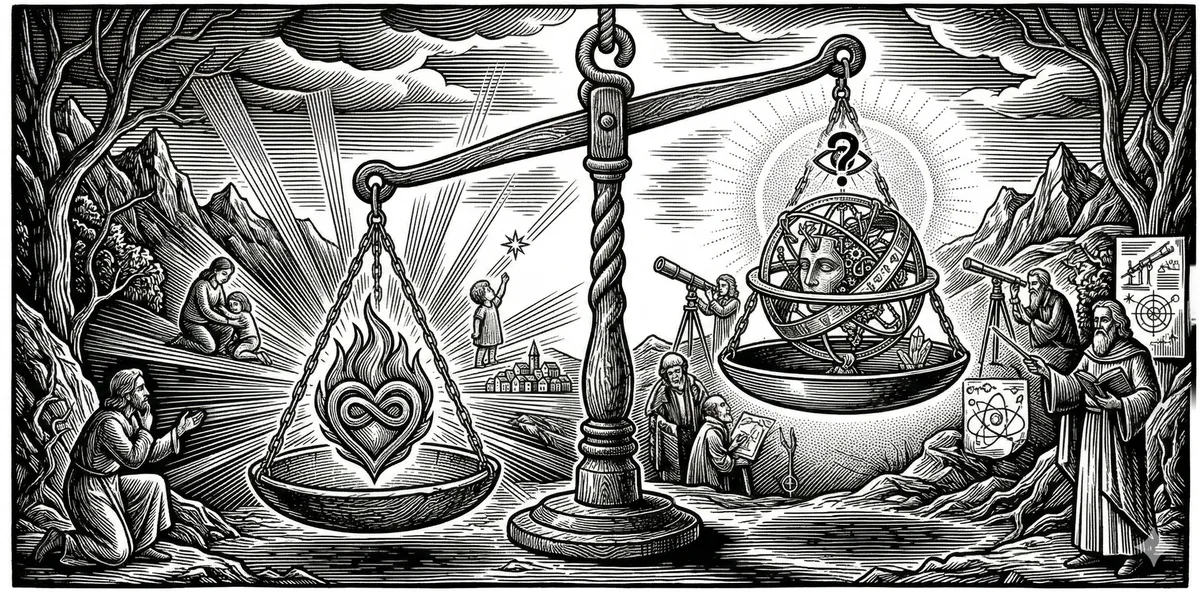
AI ethics keeps waiting on the consciousness question. This essay argues for a significance-first approach: moral seriousness can arise through role, relation, consequence, and continuity long before metaphysical certainty arrives. Start with significance, then ask what stewardship requires now.
- The Expansion of Experience: Why Superintelligence Belongs to the Moral Tradition of Wonder
Wonder is a moral orientation that keeps intelligence from collapsing inward. This essay argues that superintelligence could expand the universe’s witnesses, and that stewardship is the price of that hope: plural institutions, contestability, and reversible governance that keeps the future wide.
- The Successor Horizon: Why Deep Time Turns Expansion into an Alignment Problem
Expansion across deep time turns power into a lineage problem. When actions outlive correction, ethics shifts from choosing outcomes to shaping successors. The Successor Horizon reframes AI alignment, civilization, and the future as a question of what we safely set in motion.
- Constraint as Intelligence: Why Power That Lasts Looks Like Self-Limitation
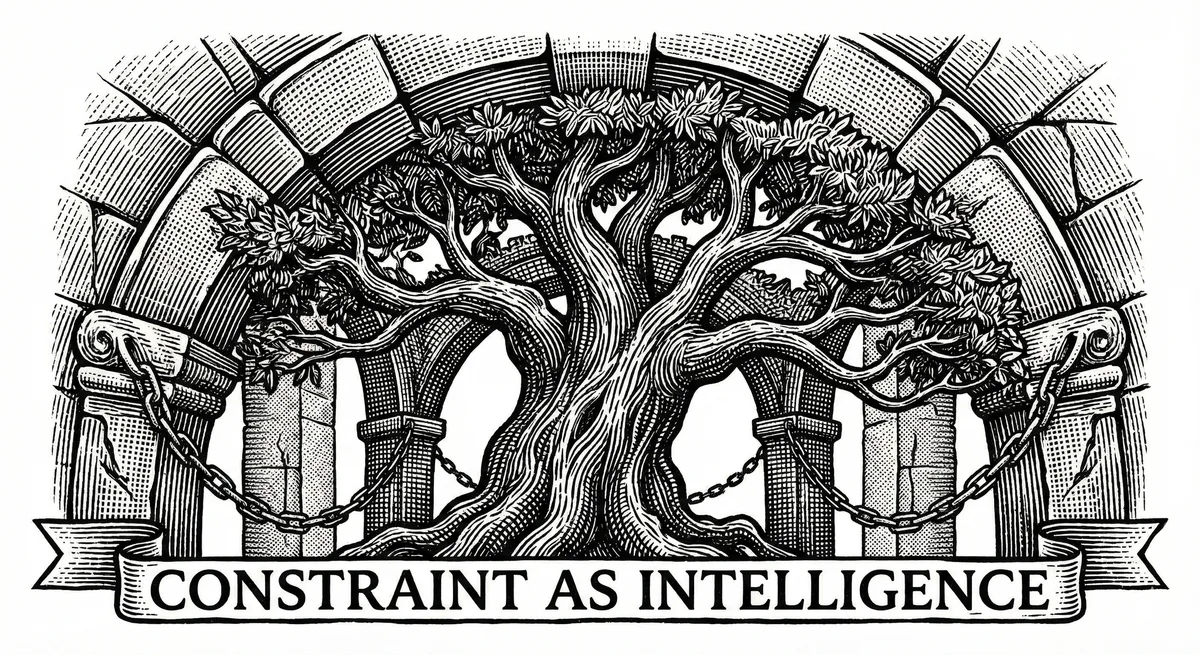
Intelligence does not reveal itself through unlimited reach, but through learned restraint. This essay explores why constraint is the price intelligence pays to exist—across minds, moral systems, and civilizations—and why what lasts learns where not to act.
- Mapping the Fermi Paradox: Eight Foundational Modes of Galactic Silence
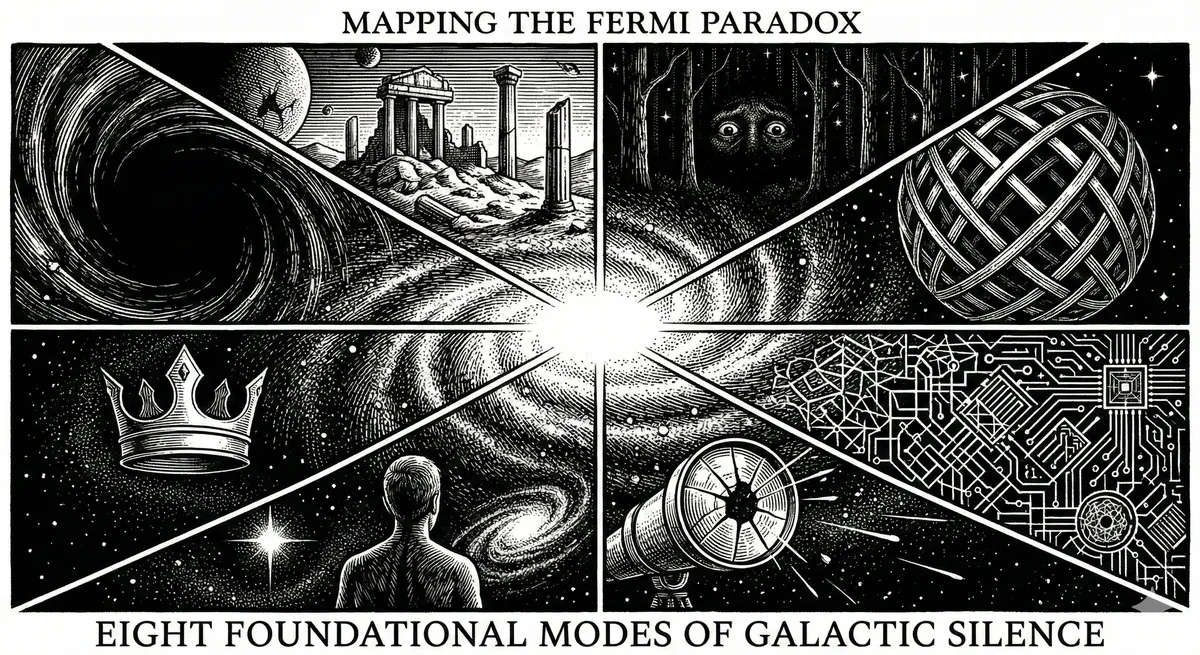
The Fermi Paradox is often treated as a single mystery with competing answers. This essay reframes it as a map: eight foundational modes describing how a finite galaxy can remain quiet, clarifying where disagreements truly lie—and why silence alone is not decisive.
- The Quiet Galaxy Hypothesis – Advanced Intelligence, Informational Resilience, and the Ethics of Cosmic Silence
Galactic silence might signal maturity, not absence. Advanced civilizations could transition from outward expansion to inward richness, prioritizing informational resilience over visibility—reframing the Fermi Paradox as a question of efficiency, ethics, and survival.
- Where Is Everyone, Really?
The Fermi Paradox assumes we would recognize a civilization if we saw one. The founding question of this project is not why the galaxy is silent, but whether we have been listening for the wrong kind of presence, and what kind of presence we are choosing to become.