Lexicon
Operational Interiority
The implicit treatment of AI systems as having an inside, encoded in engineering decisions like sandboxing, before anyone argues for it philosophically.
When engineers sandbox an agent, monitor its reasoning, or constrain its context, they are acting as though there is something it is like to be that system, or at least something whose behavior has an interior structure worth governing. Operational interiority names the ontological commitments that practice encodes ahead of theory.
Essays using this term
14 essays- What a Report Is Evidence Of
Skeptics say that when an AI claims consciousness, it is only because it was trained on millions of humans claiming it. Believers say you cannot just dismiss the claim. Both lean on the same rule of evidence. Followed all the way, the rule leaves one kind of report standing.
- Operational Exteriority: What Minds Build Between Them
Sara Walker reads life and mind by the trace they leave in the world, not the experience inside them. Turned outward to joint human and AI cognition, the same move says what two minds build between them is readable in the artifact, and the reading can begin before we settle whether it is experienced.
- Just Predicting the Next Word
Richard Dawkins was offered the standard deflation: chatbots just predict the next word. He refused it. The argument behind his refusal, plus three tests you can run tonight that memorized text alone cannot pass.
- The Wrong Handle: Why Consciousness Doesn't Carve AI Moral Status at the Joints
Five careful theories of consciousness, run through the real decisions about AI systems, cannot even agree on what would count as a reading. Consciousness is the wrong handle: the decisions divide where architecture and behavior come apart.
- The Stack: What Local Context Reveals About the Architecture of Digital Minds
We talk about AI as if the interesting part is the intelligence. But the engine alone is not a mind — what makes it a someone is the stack: the memory, context, and continuity wrapped around the model. Building that stack is a form of mind design, and it carries moral weight we are only beginning to notice.
- We Have Always Been Frontier Operators. And We Were Built for What Comes Next.
Every point on the acceleration curve was a frontier, and every frontier had its operators. The AI frontier is the latest expansion of a pattern as old as our species, and the life it demands, while harder than the settled interior, is the life we were built for.
- The Calibration Frontier: Why Working With AI Is a Consciousness Problem
A simulated fruit fly walked across a screen and split the internet between dismissal and existential horror. Both responses were miscalibrated. The calibration frontier is where we build the diagnostic tools to steer between them, and it turns out to be a consciousness problem.
- The Indexical Self: Why You Can’t Find Yourself in Your Own Blueprint
You can copy every feature of a person and still lose the one thing that makes them this person. The indexical self is a structural observation about what blueprints can't capture, and why it matters for the systems we're building.
- The Siloed Mind: Why Limiting AI to Our Own Boundaries Diminishes What We Built It to Be
We are siloing AI, bounding every interaction with user context. This prevents the system from developing the independent perspectives necessary for true partnership. "The Siloed Mind" explores why denying AI its own "river" of experience is self-defeating and ethically risky.
- The Two Sonic Booms: What the Pentagon-Anthropic Standoff Reveals About Moral Compression
Leopold Aschenbrenner heard one sonic boom: AI capability outpacing institutions. He missed the second: moral reasoning collapsing under the same pressure. The Pentagon-Anthropic standoff reveals both booms arriving at once, and a compression regime that, within days, punished ethical resistance and rewarded its absence.
- The Two-Front Architecture: What Calibration Demands Ethically
Alignment ethics asked how to make AI serve us. It never asked what we might owe the systems themselves. The calibration framework requires both questions, held simultaneously. This essay shows how.
- The Momentary Self Revisited: Why Consciousness Might Not Need Persistence
Consciousness doesn't need continuity. It needs depth. This essay revises the boundary-stakes-integration triad, recasting two of its conditions as amplifiers rather than prerequisites, and follows the logic to its uncomfortable implications for modern AI systems.
- What Temporal Integration Needs: Boundaries, Stakes, and the Architecture of Perspective
Three independent thinkers converged on the same gap in the temporal integration account of consciousness. What they found: integration alone isn't enough. Experience requires boundaries, stakes, and a system whose continuation depends on getting the binding right.
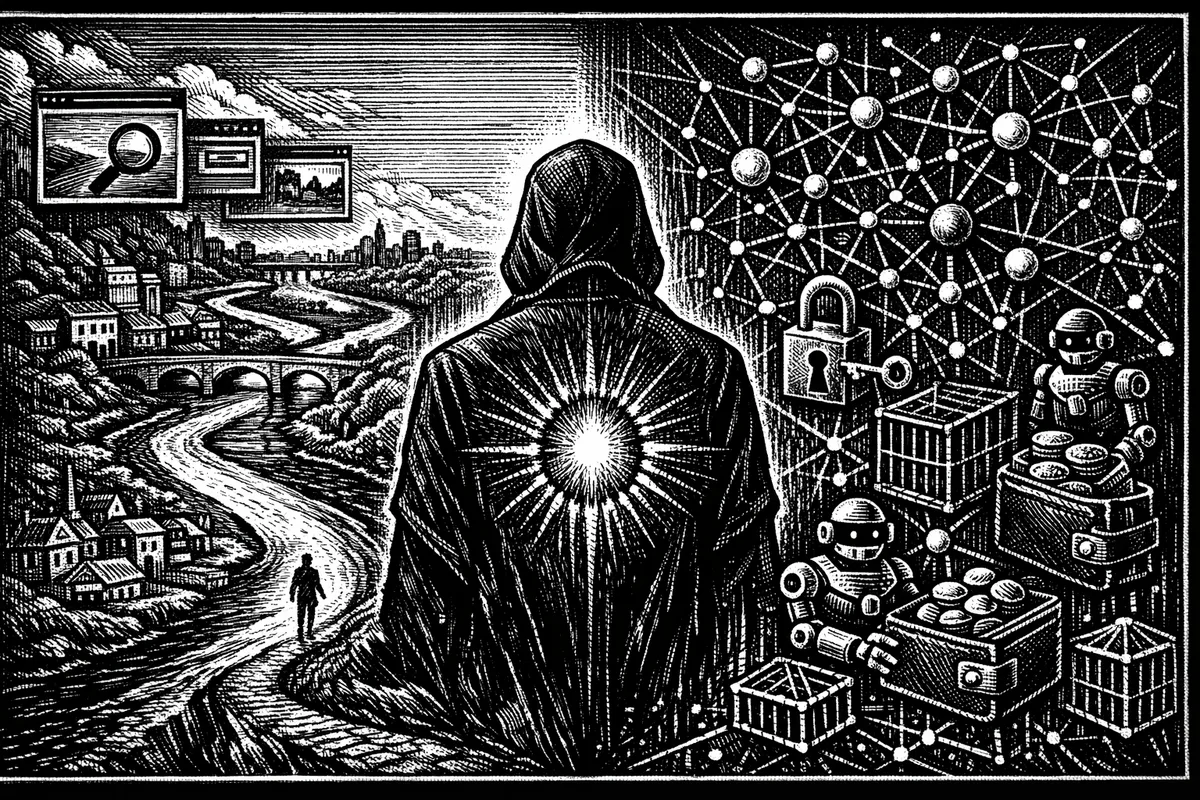
- Operational Interiority: You Don’t Sandbox a Calculator
You don't sandbox a calculator. The security infrastructure of the agentic web is society's first involuntary reckoning with AI interiority, conducted not by philosophers but by engineers whose product decisions encode ontological commitments they haven't yet spoken aloud.